
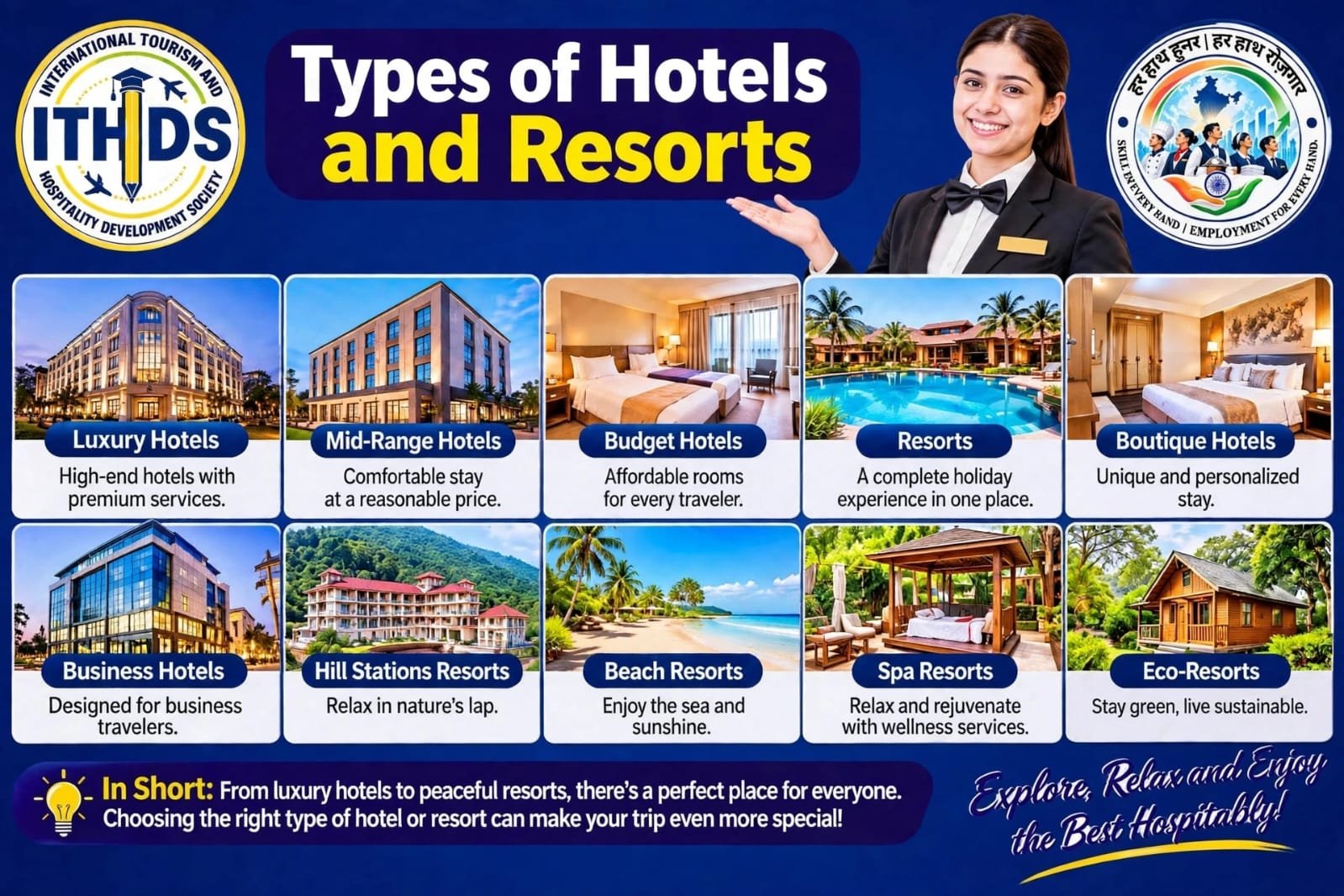

Types of Hotels and Resorts – A Complete Guide to the Hospitality Industry
Introduction
Have you ever wondered why some hotels are very luxurious while others are simple and affordable? The hospitality industry offers different types of hotels and resorts to meet the needs of different travellers.
Some people travel for business, some for holidays, and others want to relax with their families. Every traveller looks for a comfortable place to stay, good service, cleanliness, and a welcoming environment.
Let’s understand the different types of hotels and resorts in simple language.
Main Features of Different Types of Hotels
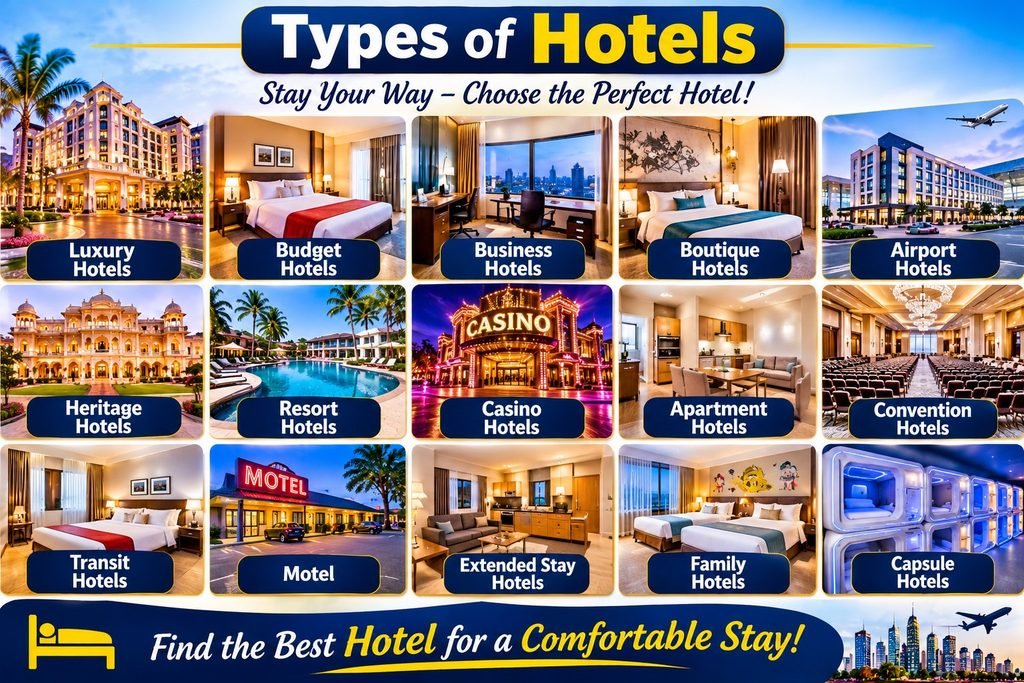
| Types of Hotels | Main Features |
|---|---|
| 1. Luxury Hotels | Premium rooms, fine dining, swimming pools, spa and excellent guest services. |
| 2. Budget Hotels | Affordable rooms, basic facilities, cleanliness and comfortable accommodation. |
| 3. Business Hotels | Meeting rooms, Wi-Fi, conference facilities and workspaces. |
| 4. Boutique Hotels | Unique interior design, personalized services and stylish rooms. |
| 5. Airport Hotels | Located near airports, short-stay facilities and convenient transport. |
| 6. Heritage Hotels | Traditional architecture, historical interiors and cultural experiences. |
| 7. Extended Stay Hotels | Long-term accommodation, kitchen facilities and laundry services. |
| 8. Transit Hotels | Short stays for passengers during connecting journeys. |
| 9. Motel | Roadside accommodation, parking facilities and easy vehicle access. |
| 10. Apartment Hotels | Fully furnished apartments, kitchen facilities and long-term stays. |
| 11. Casino Hotels | Casino facilities, restaurants, entertainment and luxury accommodation. |
| 12. Convention Hotels | Large conference halls, meeting rooms and event facilities. |
| 13. Capsule Hotels | Small sleeping pods, shared facilities and affordable stays. |
| 14. Resort Hotels | Accommodation, restaurants, swimming pools and recreational activities. |
| 15. Family Hotels | Family rooms, child-friendly facilities and recreational activities. |
Main Features of Different Types of Resorts
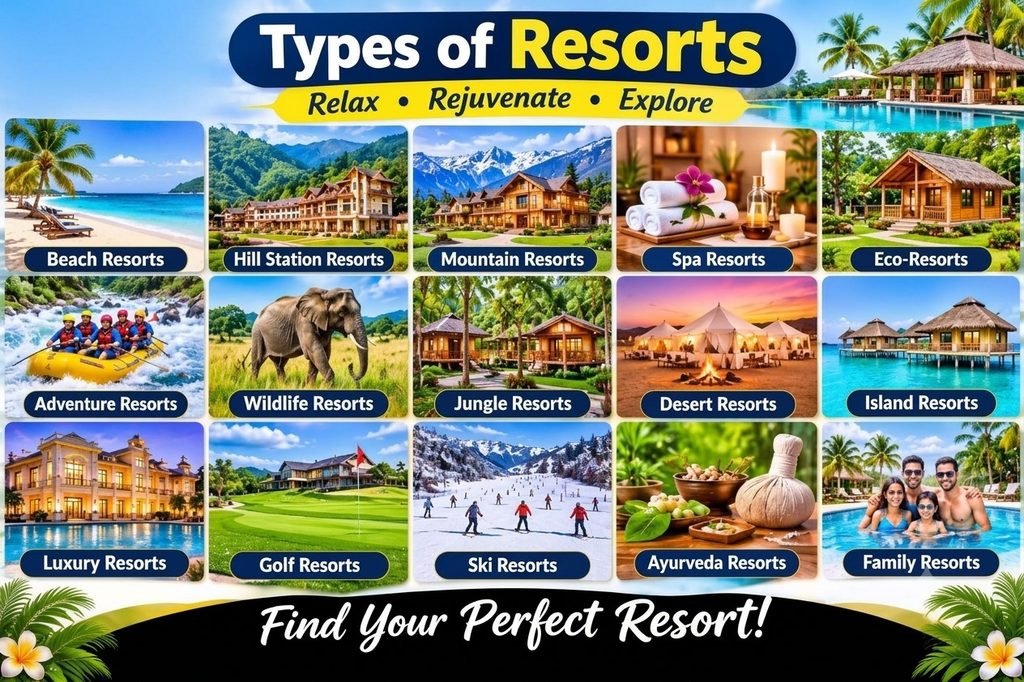
| Types of Resorts | Main Features |
|---|---|
| 1. Beach Resorts | Sea views, beach activities, swimming and water sports. |
| 2. Hill Station Resorts | Mountain views, peaceful surroundings and nature activities. |
| 3. Mountain Resorts | Trekking, hiking and adventure activities. |
| 4. Spa Resorts | Massage, yoga, meditation and wellness treatments. |
| 5. Eco-Resorts | Eco-friendly accommodation and sustainable tourism. |
| 6. Adventure Resorts | Camping, trekking, rafting and outdoor activities. |
| 7. Wildlife Resorts | Jungle safaris, wildlife watching and nature experiences. |
| 8. Jungle Resorts | Forest surroundings, nature walks and peaceful stays. |
| 9. Desert Resorts | Camel rides, desert safaris and cultural programmes. |
| 10. Island Resorts | Private beaches, sea activities and tropical accommodation. |
| 11. Luxury Resorts | Premium rooms, fine dining, spa and personalized services. |
| 12. Golf Resorts | Golf courses, sports facilities and luxury accommodation. |
| 13. Ski Resorts | Snow activities, skiing and winter sports. |
| 14. Ayurveda Resorts | Ayurvedic treatments, yoga and traditional wellness programmes. |
| 15. Family Resorts | Family entertainment, children’s activities and recreational facilities. |
Importance of Hotels and Resorts in the Hospitality Industry
Hotels and resorts play an important role in tourism and hospitality. They provide employment opportunities and help develop the tourism sector.
They also create career opportunities in different departments, such as:
- Front Office Department
- Housekeeping Department
- Food and Beverage Service
- Food Production (Kitchen)
- Guest Relations
- Hotel Management
Why Should Students Learn About Different Types of Hotels?
Students who want to build a career in hotel management should understand different types of hotels and resorts.
This knowledge helps students understand hotel operations, guest requirements, service standards, and career opportunities.
At International Tourism and Hospitality Development Society (ITHDS), Haldwani, students can develop hospitality knowledge and practical skills to prepare for opportunities in the hotel and tourism industry.
Conclusion
Hotels and resorts are an important part of our travel and hospitality experiences. From luxury hotels to budget accommodation and peaceful eco-resorts, every type of property has something different to offer.
Understanding these categories is a great starting point for students who want to make a career in hotel management.
Remember, hospitality is not just about providing a room. It is about making every guest feel comfortable, welcomed, and special.