Types of Food Service in the Hospitality Industry

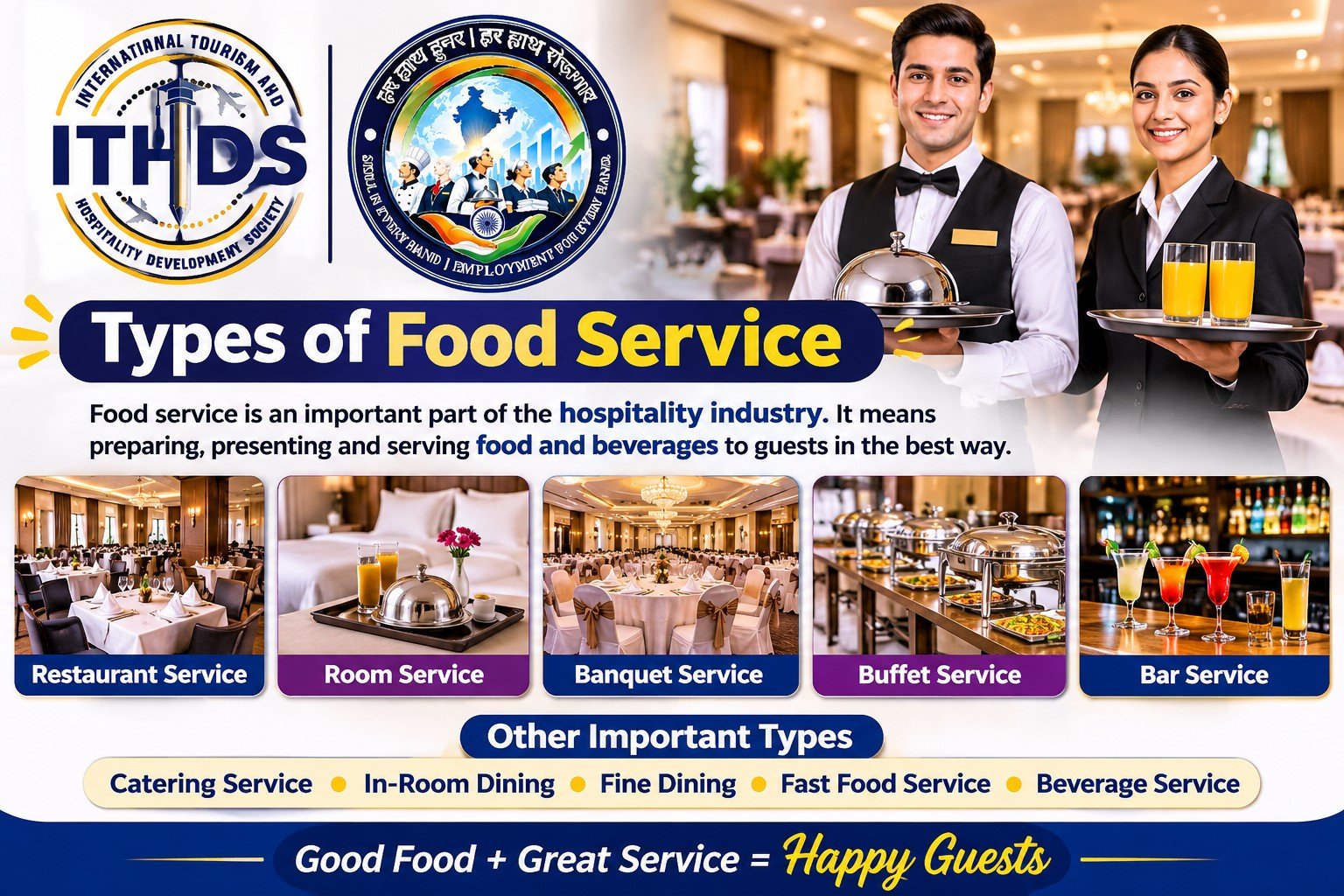
Food service is one of the most important parts of the hotel and hospitality industry. It is all about preparing, presenting, and serving food and beverages to guests in a professional and friendly manner.

Whether we visit a luxury hotel, restaurant, café, resort, or attend a special event, food service plays an important role in creating a good guest experience.

There are different types of food service followed by hotels and restaurants. Each type has its own style, service method, and importance.

1. Main Types of Food Service

Types of Food Service in the Hospitality Industry

1. Table Service

Table service is a common type of food service in hotels and restaurants. Guests sit at a table, and trained staff take their orders and serve food directly to them.

Examples: Fine dining restaurants, luxury hotels and family restaurants.

2. Buffet Service

In buffet service, different food items are arranged on a table or counter. Guests can choose their favourite dishes and serve themselves.

Examples: Hotel breakfast, wedding functions and special events.

3. Self-Service

In self-service, guests collect their food and beverages from a counter without waiting for a waiter to serve them.

Examples: Food courts, cafeterias and college canteens.

4. Room Service

Room service allows hotel guests to enjoy food and beverages in the comfort of their rooms. Guests can place their orders through the telephone or hotel ordering system.

Examples: Breakfast in the room, dinner orders and late-night food service.

5. Cafeteria Service

Cafeteria service is a simple and quick method of serving food. Guests select food from a counter and pay before or after collecting their meals.

Examples: Schools, colleges, offices and hospitals.

6. Banquet Service

Banquet service is provided for special occasions and large gatherings. Food is served to guests during weddings, conferences, birthday parties and other celebrations.

Examples: Wedding receptions, corporate meetings and hotel events.

7. Fast Food Service

Fast food service focuses on preparing and serving food quickly. It is suitable for customers who want a quick meal.

Examples: Burgers, pizzas, sandwiches and French fries.

8. Takeaway Service

Takeaway service allows customers to order food, collect it from the restaurant and enjoy it somewhere else.

Examples: Restaurant takeaway counters and food delivery orders.

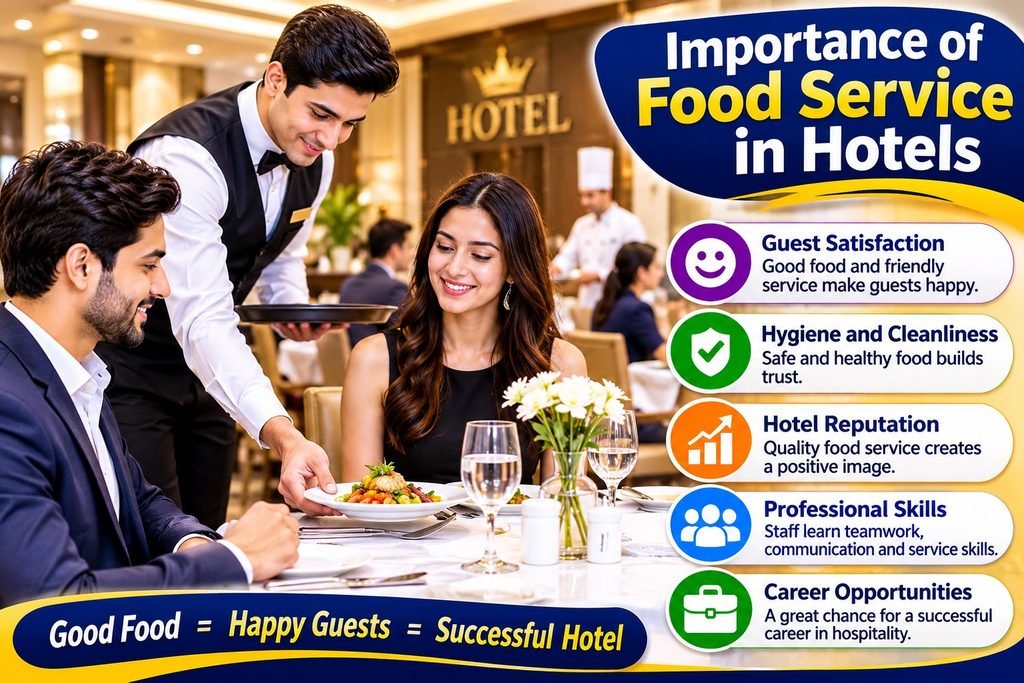
2. Importance of Food Service in Hotels

Food service is important because it helps hotels provide a comfortable and enjoyable experience to their guests.

  • Guest Satisfaction: Good food and friendly service make guests happy.
  • Professional Skills: Staff learn communication, teamwork and customer-handling skills.
  • Hygiene and Cleanliness: Proper food handling keeps food safe and healthy.
  • Hotel Reputation: Quality food service creates a positive impression of the hotel.
  • Career Opportunities: Food service offers job opportunities in hotels, restaurants, resorts and catering businesses.
3. Skills Required for Food Service Staff

A successful food service professional should have:

  1. Good communication skills.
  2. Personal grooming and hygiene.
  3. Knowledge of food and beverages.
  4. Teamwork and coordination.
  5. Time management.
  6. Customer service skills.
  7. Positive attitude and patience.

4. Career Opportunities in Food Service

Students interested in the hospitality industry can explore different career options, such as:

  • Restaurant Captain
  • Food and Beverage Associate
  • Waiter or Steward
  • Restaurant Supervisor
  • Banquet Staff
  • Restaurant Manager
  • Food and Beverage Manager

Conclusion

Food service is more than just serving food. It is about making guests feel comfortable, respected and satisfied. Every type of food service has its own importance in the hospitality industry.

Learning different food service methods helps students develop practical knowledge and build a successful career in hotels, restaurants, resorts and catering businesses.

At International Tourism and Hospitality Development Society (ITHDS), students can learn about hospitality operations and develop the practical skills needed to grow in the hotel industry.
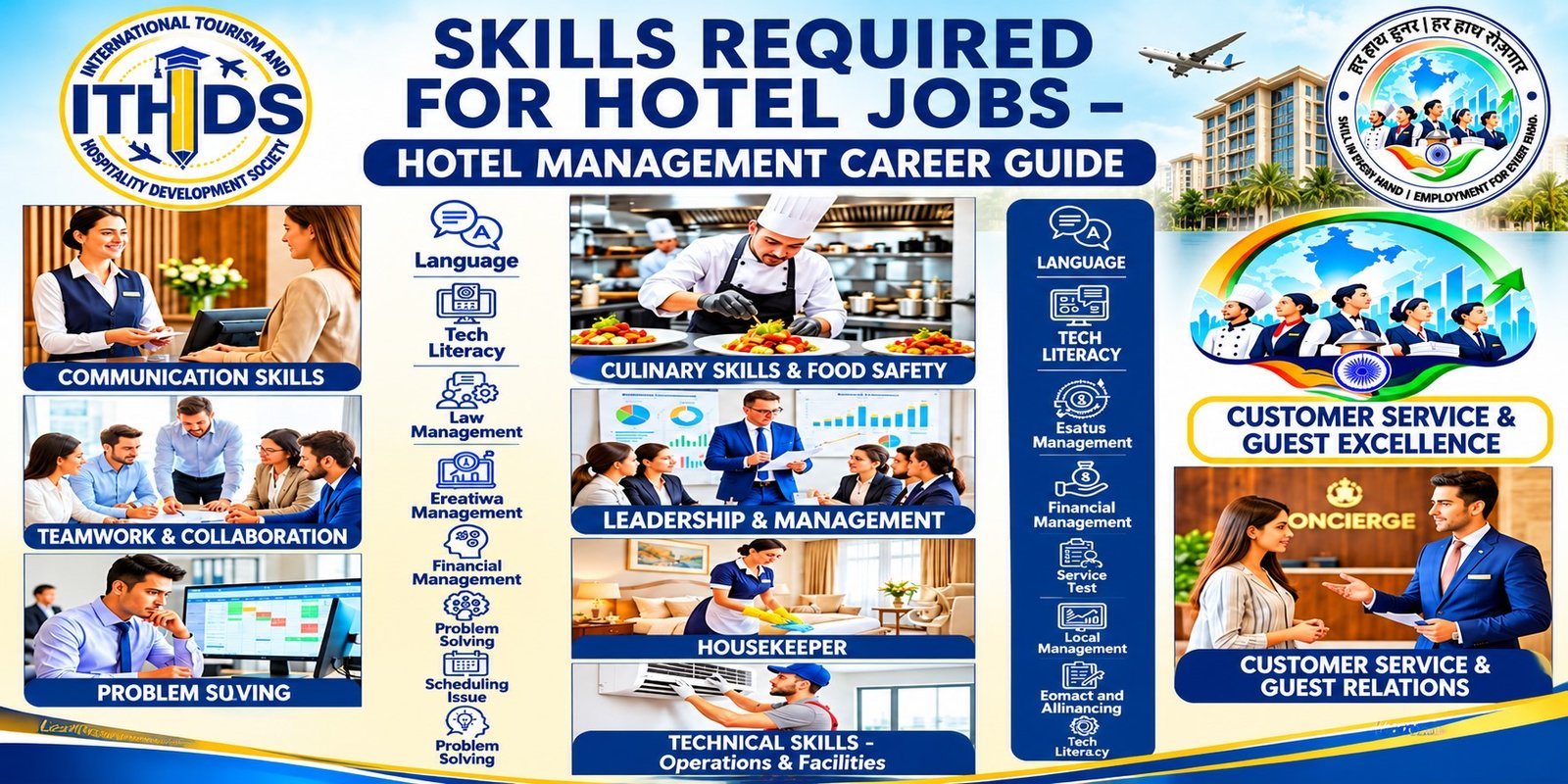
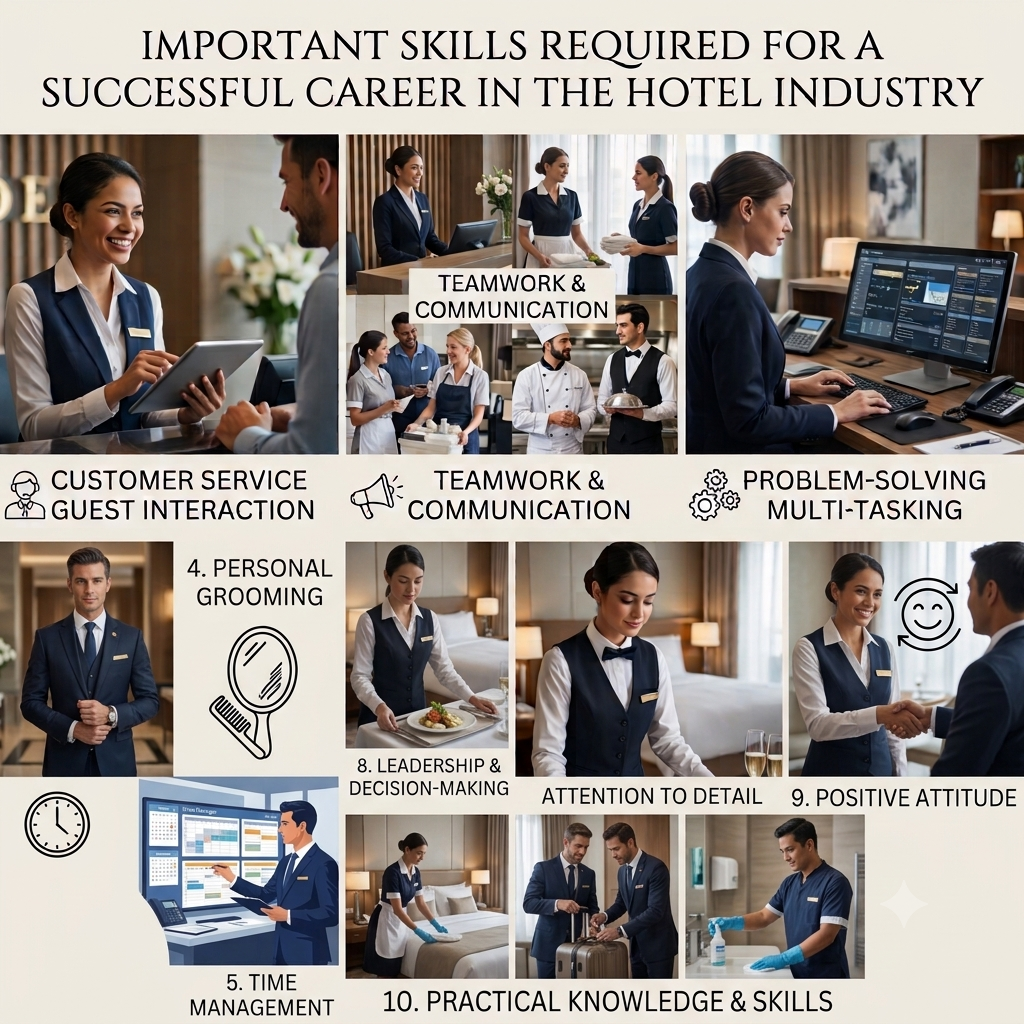
Skills Required for Hotel Jobs – Hotel Management Career Guide

The hotel industry is one of the most exciting career options for students who enjoy meeting new people, helping others, and working in a professional environment. Hotels are not just about rooms and food; they are about making guests feel comfortable, welcomed, and happy.

To get a good job in a hotel, having a hotel management degree or diploma is helpful, but practical skills, confidence, and a positive attitude are equally important.

Let’s understand the important skills required to build a successful career in the hotel industry.

S.No.Important SkillsWhy These Skills Are Important
1Communication SkillsTo speak politely and communicate with guests.
2Personal GroomingTo maintain a clean, smart, and professional appearance.
3Customer ServiceTo understand guest needs and provide better service.
4TeamworkTo work smoothly with different hotel departments.
5Time ManagementTo complete daily tasks on time.
6Problem-SolvingTo handle guest complaints and difficult situations.
7Computer KnowledgeTo manage bookings, billing, and guest records.
8Leadership SkillsTo guide team members and take responsibility.
9Positive AttitudeTo stay polite, patient, and helpful at work.
10Practical KnowledgeTo understand Front Office, Housekeeping, F&B, and Food Production.

Students should understand the basic work of different hotel departments:

Hotel DepartmentImportant Skills
Front OfficeCommunication, computer knowledge, guest handling
HousekeepingCleaning, room preparation, attention to detail
Food & BeverageRestaurant service, table setup, customer handling
Food ProductionCooking, kitchen hygiene, food preparation
Hotel ManagementLeadership, planning, teamwork

Career Opportunities After Hotel Management Training

After learning these skills, students can explore different job opportunities in the hospitality industry.

  • Front Office Associate
  • Receptionist
  • Guest Relations Executive
  • Housekeeping Associate
  • Restaurant Service Staff
  • Food and Beverage Associate
  • Commis Chef
  • Hotel Supervisor
  • Hotel Operations Executive

How Can Students Develop These Skills?

Students interested in hotel jobs should focus on both classroom learning and practical training.

Here are some useful tips:

  1. Practise speaking English every day.
  2. Maintain good personal grooming.
  3. Participate in practical hotel training.
  4. Learn basic computer skills.
  5. Improve confidence and communication.
  6. Understand the working of hotel departments.
  7. Develop a helpful and positive attitude.

Why Choose Hotel Management Training at ITHDS?

he International Tourism and Hospitality Development Society (ITHDS), Haldwani focuses on hospitality education and practical skill development.

Our training approach helps students understand hotel operations, improve their communication, develop professional grooming habits, and gain practical knowledge of different hotel departments.

Admissions Open for 2026

  • Course: 1-Year Diploma in Hotel Management
  • Practical-oriented learning
  • Hospitality skills development
  • Career preparation for the hotel industry

Contact ITHDS:

  • Phone: 6397405476, 9140199179
  • Website: www.ithds.in
  • Location: Haldwani, Uttarakhand

Conclusion

Getting a job in a hotel is not only about having a certificate. It is about having the right skills, confidence, discipline, and a willingness to learn. Good communication, personal grooming, teamwork, and customer service can help you build a strong future in the hospitality industry.

Remember: Good skills open the door to hotel jobs, but a good attitude helps you grow in your career!

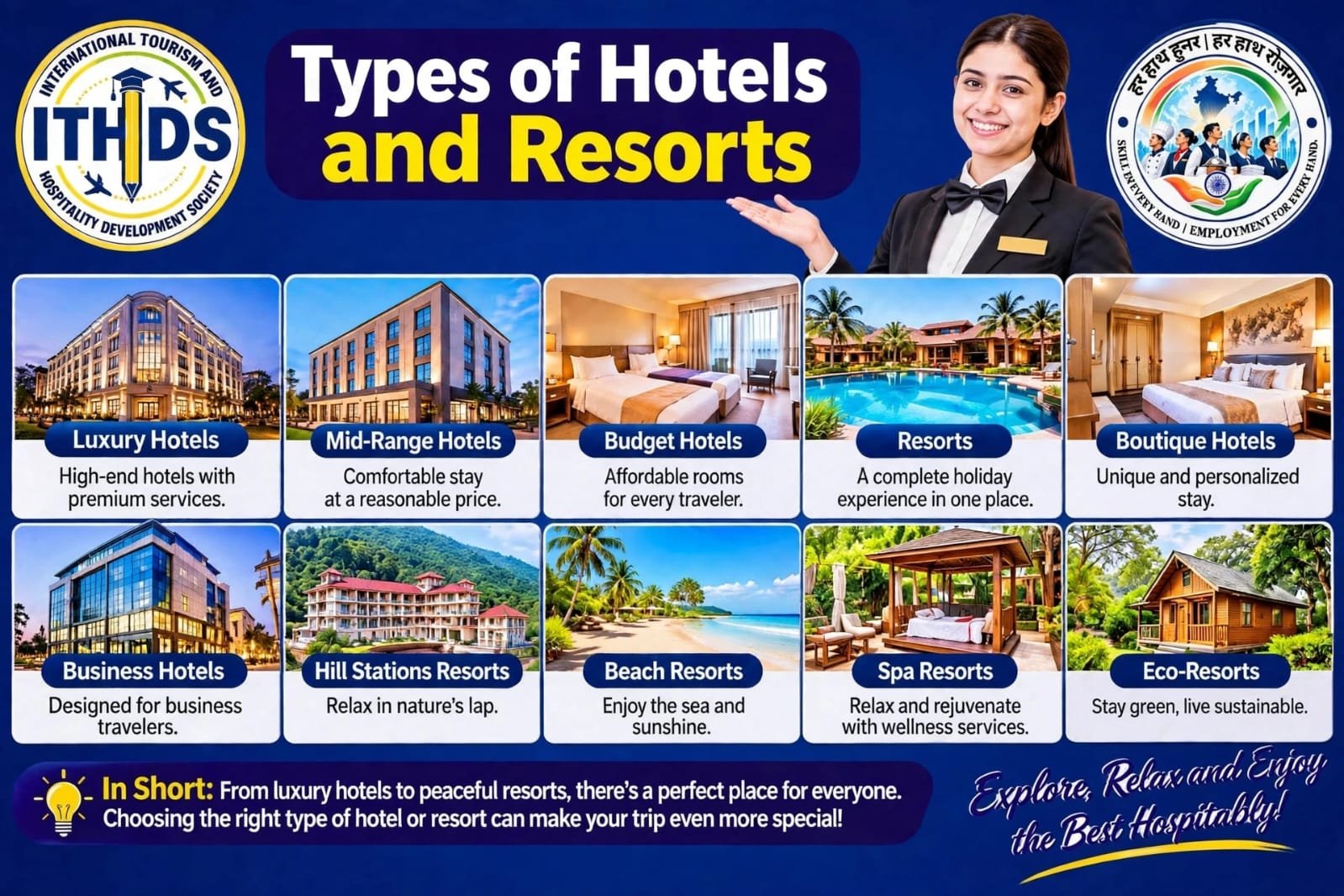
Types of Hotels and Resorts – A Complete Guide to the Hospitality Industry

Introduction

Have you ever wondered why some hotels are very luxurious while others are simple and affordable? The hospitality industry offers different types of hotels and resorts to meet the needs of different travellers.

Some people travel for business, some for holidays, and others want to relax with their families. Every traveller looks for a comfortable place to stay, good service, cleanliness, and a welcoming environment.

Let’s understand the different types of hotels and resorts in simple language.

Main Features of Different Types of Hotels

Types of HotelsMain Features
1. Luxury HotelsPremium rooms, fine dining, swimming pools, spa and excellent guest services.
2. Budget HotelsAffordable rooms, basic facilities, cleanliness and comfortable accommodation.
3. Business HotelsMeeting rooms, Wi-Fi, conference facilities and workspaces.
4. Boutique HotelsUnique interior design, personalized services and stylish rooms.
5. Airport HotelsLocated near airports, short-stay facilities and convenient transport.
6. Heritage HotelsTraditional architecture, historical interiors and cultural experiences.
7. Extended Stay HotelsLong-term accommodation, kitchen facilities and laundry services.
8. Transit HotelsShort stays for passengers during connecting journeys.
9. MotelRoadside accommodation, parking facilities and easy vehicle access.
10. Apartment HotelsFully furnished apartments, kitchen facilities and long-term stays.
11. Casino HotelsCasino facilities, restaurants, entertainment and luxury accommodation.
12. Convention HotelsLarge conference halls, meeting rooms and event facilities.
13. Capsule HotelsSmall sleeping pods, shared facilities and affordable stays.
14. Resort HotelsAccommodation, restaurants, swimming pools and recreational activities.
15. Family HotelsFamily rooms, child-friendly facilities and recreational activities.

Main Features of Different Types of Resorts

Types of ResortsMain Features
1. Beach ResortsSea views, beach activities, swimming and water sports.
2. Hill Station ResortsMountain views, peaceful surroundings and nature activities.
3. Mountain ResortsTrekking, hiking and adventure activities.
4. Spa ResortsMassage, yoga, meditation and wellness treatments.
5. Eco-ResortsEco-friendly accommodation and sustainable tourism.
6. Adventure ResortsCamping, trekking, rafting and outdoor activities.
7. Wildlife ResortsJungle safaris, wildlife watching and nature experiences.
8. Jungle ResortsForest surroundings, nature walks and peaceful stays.
9. Desert ResortsCamel rides, desert safaris and cultural programmes.
10. Island ResortsPrivate beaches, sea activities and tropical accommodation.
11. Luxury ResortsPremium rooms, fine dining, spa and personalized services.
12. Golf ResortsGolf courses, sports facilities and luxury accommodation.
13. Ski ResortsSnow activities, skiing and winter sports.
14. Ayurveda ResortsAyurvedic treatments, yoga and traditional wellness programmes.
15. Family ResortsFamily entertainment, children’s activities and recreational facilities.

Importance of Hotels and Resorts in the Hospitality Industry

Hotels and resorts play an important role in tourism and hospitality. They provide employment opportunities and help develop the tourism sector.

They also create career opportunities in different departments, such as:

  • Front Office Department
  • Housekeeping Department
  • Food and Beverage Service
  • Food Production (Kitchen)
  • Guest Relations
  • Hotel Management

Why Should Students Learn About Different Types of Hotels?

Students who want to build a career in hotel management should understand different types of hotels and resorts.

This knowledge helps students understand hotel operations, guest requirements, service standards, and career opportunities.

At International Tourism and Hospitality Development Society (ITHDS), Haldwani, students can develop hospitality knowledge and practical skills to prepare for opportunities in the hotel and tourism industry.

Conclusion

Hotels and resorts are an important part of our travel and hospitality experiences. From luxury hotels to budget accommodation and peaceful eco-resorts, every type of property has something different to offer.

Understanding these categories is a great starting point for students who want to make a career in hotel management.

Remember, hospitality is not just about providing a room. It is about making every guest feel comfortable, welcomed, and special.

Restaurant Service Techniques – A Complete Guide for Hospitality Students

Introduction

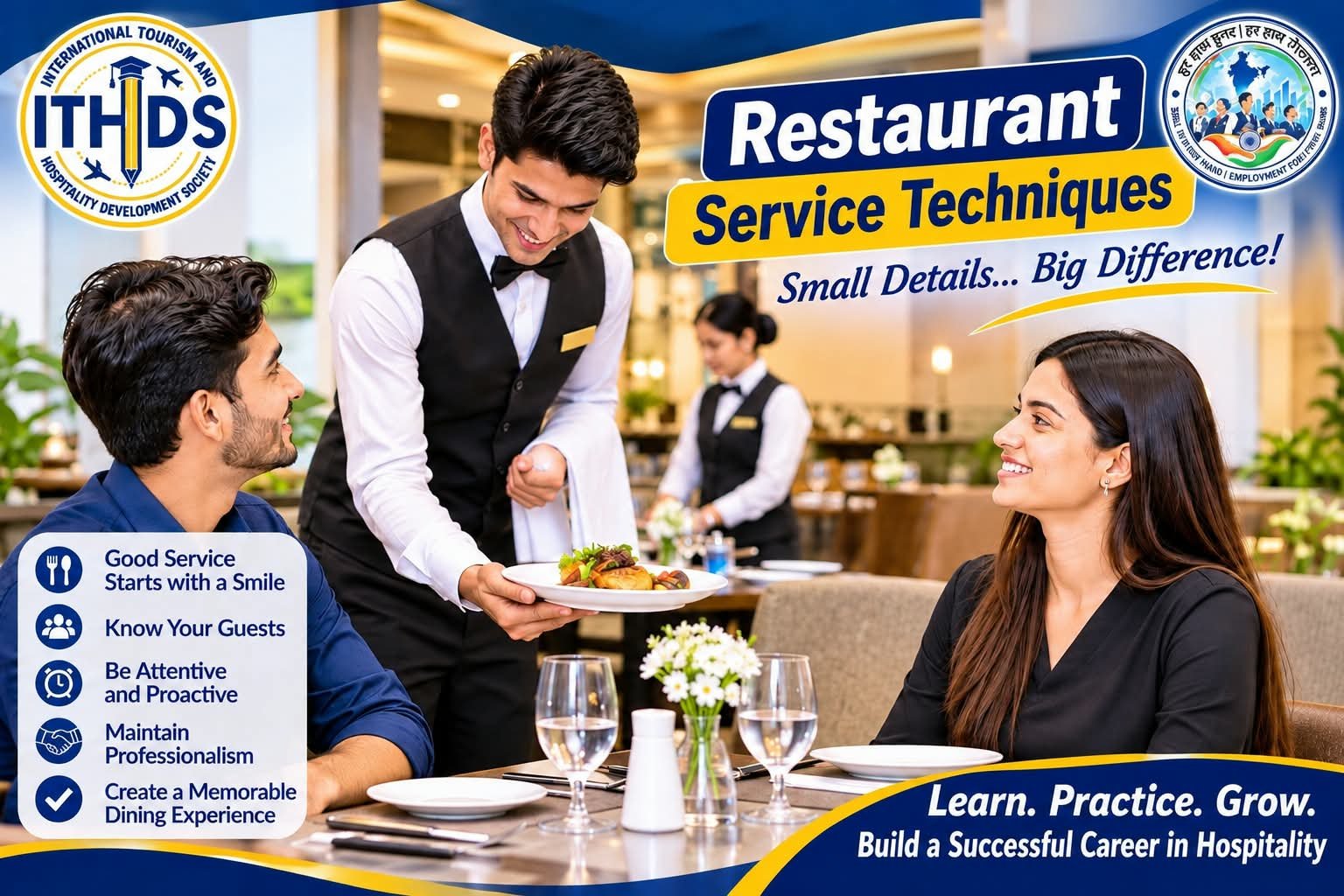
Restaurant service is one of the most important parts of the hospitality industry. When guests visit a restaurant, they expect more than just delicious food. They also want friendly staff, quick service, a clean environment, and a comfortable dining experience.

Good restaurant service makes guests feel welcome and special. A professional restaurant staff member understands how to communicate with customers, take orders correctly, serve food properly, and handle guest requests politely.

For hotel management students, learning restaurant service techniques is very important because these skills help them build a successful career in hotels, restaurants, cafés, and resorts.

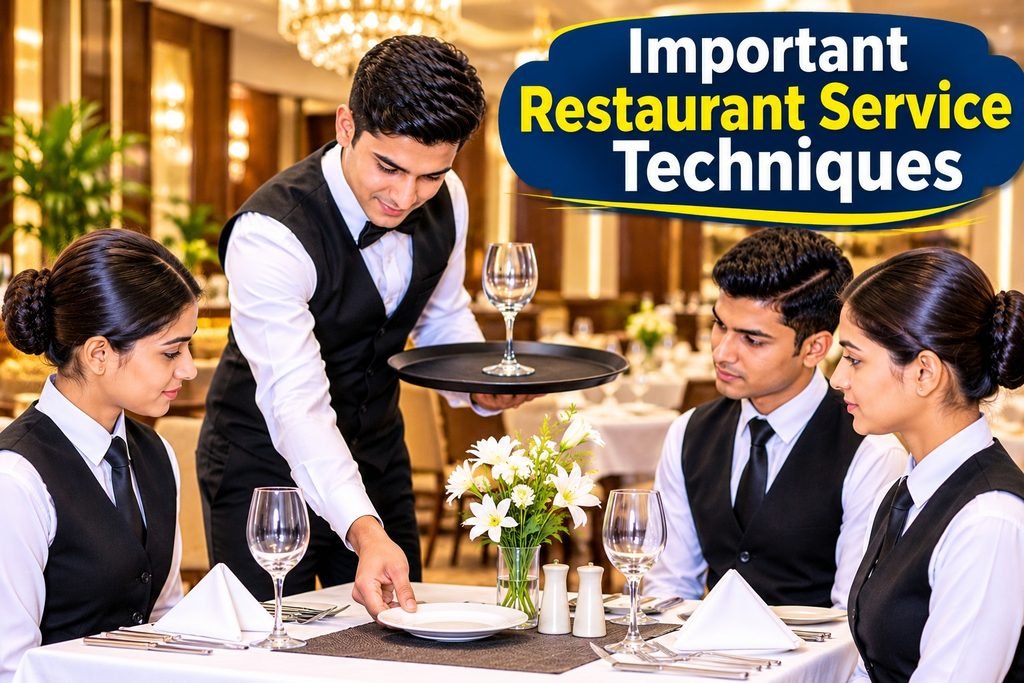
Important Restaurant Service Techniques

1. Welcoming Guests with a Smile

The first impression matters. Always welcome guests with a warm smile and a polite greeting. Make them feel comfortable when they enter the restaurant.

2. Proper Table Setup

A clean and properly arranged table creates a good impression. Cutlery, crockery, glassware, napkins, and other table accessories should be placed correctly before guests arrive.

3. Taking Orders Correctly

Listen carefully when guests place their orders. Understand their requirements, repeat the order when necessary, and communicate any special requests to the kitchen staff.

4. Serving Food Professionally

Food should be served carefully and confidently. Staff should follow the restaurant’s service style, maintain proper serving etiquette, and avoid disturbing guests while they are eating.

5. Good Communication Skills

Restaurant staff should speak politely and clearly. They should listen to guests, answer questions confidently, and handle complaints patiently.

6. Maintaining Hygiene and Cleanliness

Personal grooming, clean uniforms, washed hands, and hygienic service practices are essential. Tables should also be cleaned and prepared properly for the next guests.

7. Handling Guest Complaints

Sometimes guests may not be satisfied with the service or food. Staff should listen calmly, apologise politely when appropriate, and inform the supervisor to resolve the issue.

8. Saying Thank You to Guests

Before guests leave, thank them for visiting. A simple smile and a polite goodbye can create a lasting positive impression.

Why Are Restaurant Service Skills Important?

Restaurant service skills help students and hospitality professionals:

  • Build confidence and communication skills.
  • Provide better customer service.
  • Learn professional dining etiquette.
  • Work efficiently as part of a team.
  • Handle different types of guests.
  • Develop career opportunities in the hospitality industry.

Practical Training for Hotel Management Students

Reading about restaurant service is helpful, but practical training makes learning more effective. Students should practise table setup, order taking, food serving, guest handling, and restaurant etiquette.

At the International Tourism and Hospitality Development Society (ITHDS), Haldwani, students can develop hospitality knowledge and practical skills to prepare for opportunities in the hotel and restaurant industry.

Conclusion

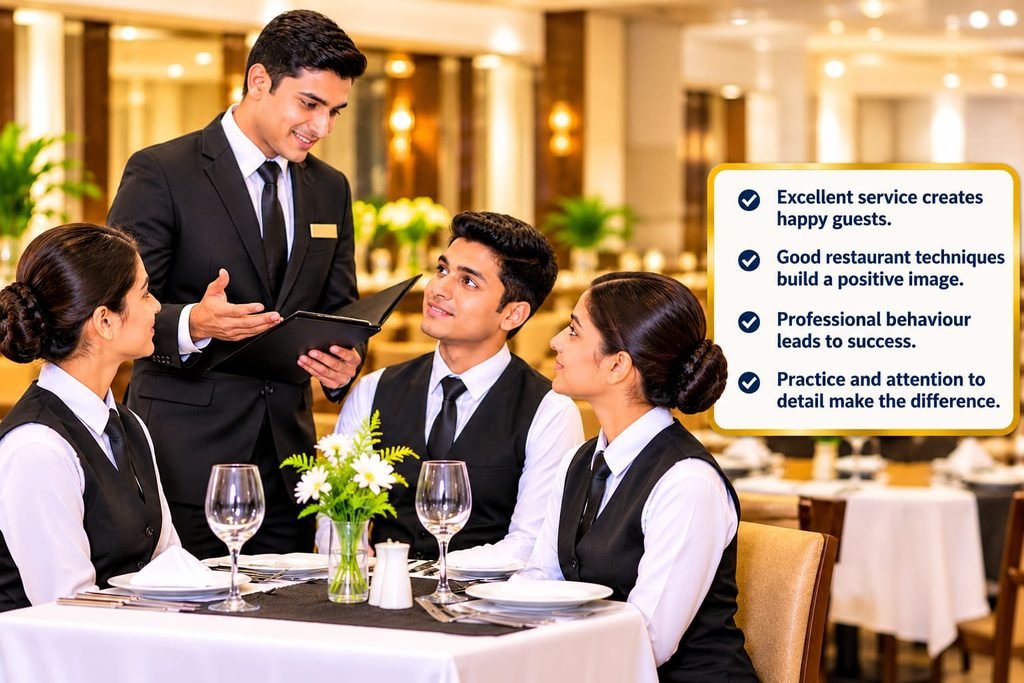
Restaurant service is not just about serving food; it is about making every guest feel comfortable, respected, and satisfied. A friendly smile, good communication, proper grooming, and professional service can turn an ordinary restaurant visit into a memorable experience.

Remember: Good food attracts guests, but excellent service brings them back!

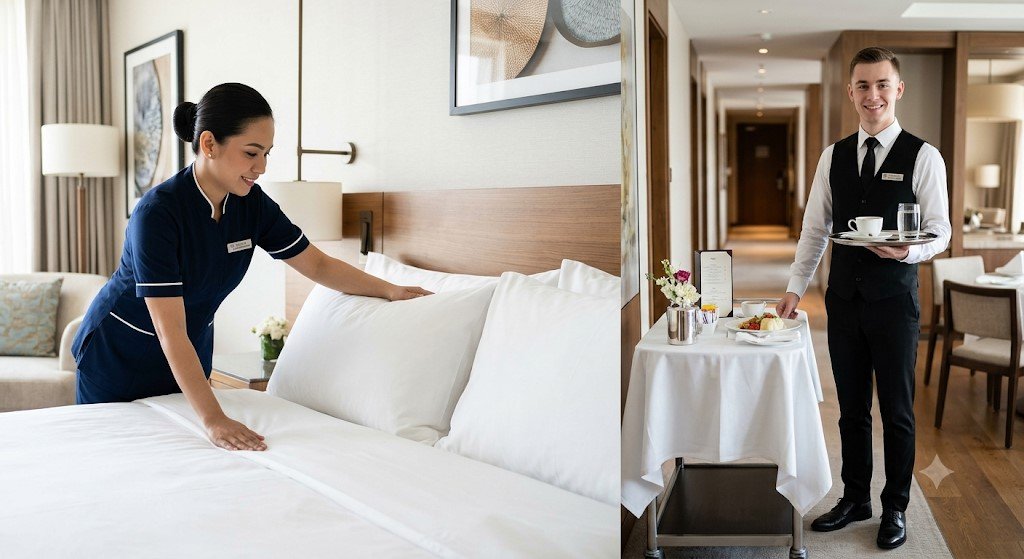
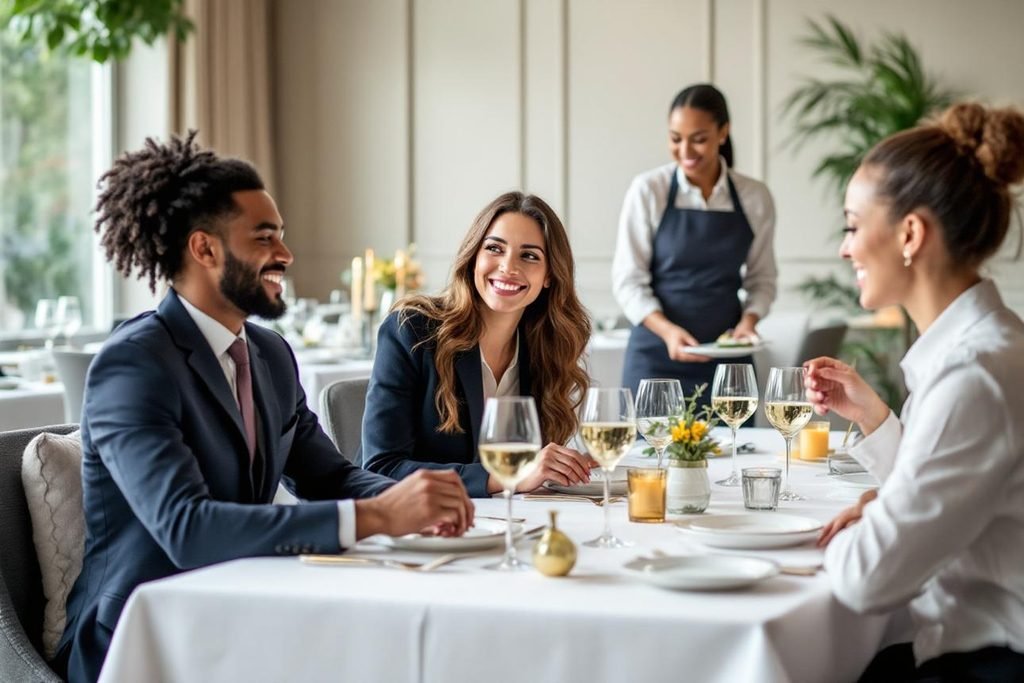
Restaurant staff serving food to guests in a professional dining environment.
Importance of Personal Grooming in the Hospitality Indust

Introduction

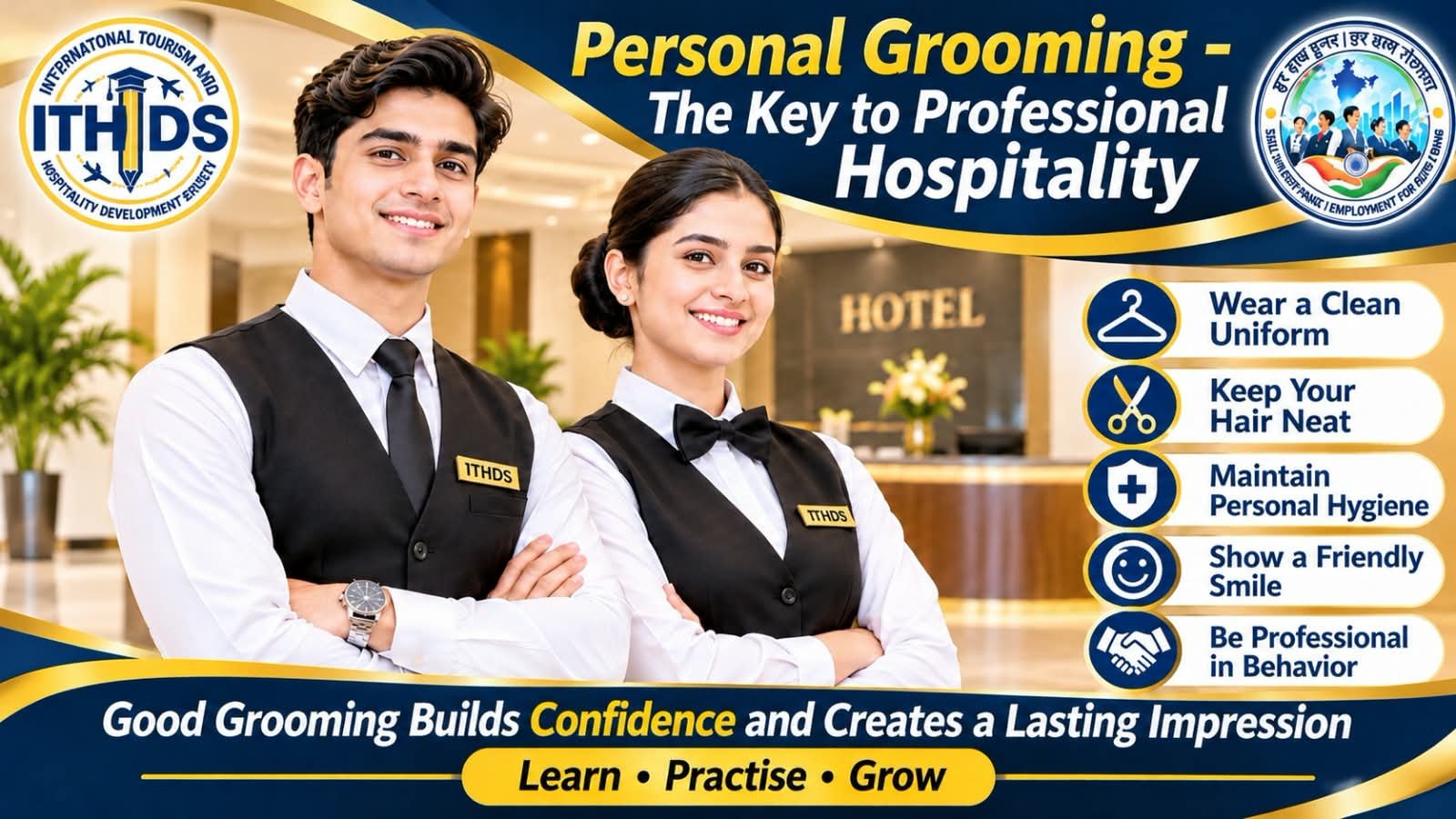
Personal grooming is one of the most important parts of the hospitality industry. Whether you work in a hotel, restaurant, resort, or front office, the way you look, dress, and present yourself creates the first impression on guests.

In the hospitality industry, guests expect professional service, cleanliness, and friendly behavior. A well-groomed employee looks professional, feels confident, and helps guests feel comfortable. Personal grooming is not just about looking good; it is also about maintaining hygiene, developing good habits, and showing respect for your work and guests.

What Is Personal Grooming?

Personal grooming means taking care of your appearance, personal hygiene, clothing, and overall presentation. It includes keeping yourself clean, wearing a neat uniform, maintaining a professional hairstyle, and following workplace grooming standards.

For example, a hotel receptionist should wear a clean and properly ironed uniform, maintain neat hair, keep their nails clean, and greet guests with a smile. Similarly, housekeeping staff, chefs, and restaurant service employees must follow grooming standards according to their department

Learn the importance of personal grooming in the hospitality industry, including hygiene, professional appearance, confidence, and essential grooming tips for hotel management students.

Why Is Personal Grooming Important in Hospitality?

1. Creates a Good First Impression

First impressions matter a lot in hotels and restaurants. Guests often notice an employee’s appearance before they experience the service. Clean clothes, neat hair, polished shoes, and a pleasant smile create a positive impression.

2. Maintains Personal Hygiene

Personal hygiene is especially important when working around food, guests, and hotel rooms. Regular bathing, clean hands, trimmed nails, fresh uniforms, and proper grooming help maintain cleanliness and reduce the risk of contamination.

3. Builds Confidence

When employees look neat and professional, they often feel more confident while speaking with guests and handling their responsibilities. Good grooming also helps students feel prepared for practical training, interviews, and future job opportunities.

4. Shows Professionalism

A well-groomed employee shows discipline, responsibility, and respect for the workplace. Following grooming standards tells guests and colleagues that the employee takes their job seriously.

5. Improves Guest Satisfaction

Guests feel more comfortable when hotel staff look clean, approachable, and professional. Along with good communication and helpful behavior, personal grooming contributes to a welcoming guest experience.

6. Supports Food Safety

In the kitchen and food service departments, grooming is directly connected to hygiene. Employees should follow department-specific rules, such as wearing clean uniforms, keeping hair properly covered where required, washing hands correctly, and avoiding jewellery when it could create a hygiene risk.

 Housekeeping & Food & Beverage Gromming

How ITHDS Helps Students Develop Professional Grooming.

At the International Tourism and Hospitality Development Society (ITHDS), Haldwani, personal grooming is an important topic for students preparing for careers in the hospitality industry.

Learning about professional appearance, personal hygiene, communication, body language, and workplace discipline helps students understand what hotels and restaurants expect from their employees. Practising these habits during training can help students prepare for interviews, practical sessions, and professional responsibilities.

Conclusion

Personal grooming is a basic but essential skill for anyone who wants to build a career in hotel management. It helps create a good first impression, supports hygiene, builds confidence, and reflects professionalism.

Remember, good grooming is not about expensive clothes or fashionable looks. It is about being clean, neat, confident, and professional every day. Small habits can make a big difference in your hospitality career.

If you are planning to build your future in the hotel and hospitality industry, start developing good grooming habits today!

Hotel Table Setup and Dining Etiquette

A Complete Guide for Hotel Management Students

In the hospitality industry, small things can make a big difference. The way a table is arranged, how food is served, and how people behave while dining all help create a good experience for guests. This is why hotel table setup and dining etiquette are important parts of hotel management training.

Hotels and restaurants always try to make their guests feel comfortable and welcome. A clean table, properly arranged cutlery, polished glasses, and polite service can make a guest’s dining experience more enjoyable.

What Is Hotel Table Setup?

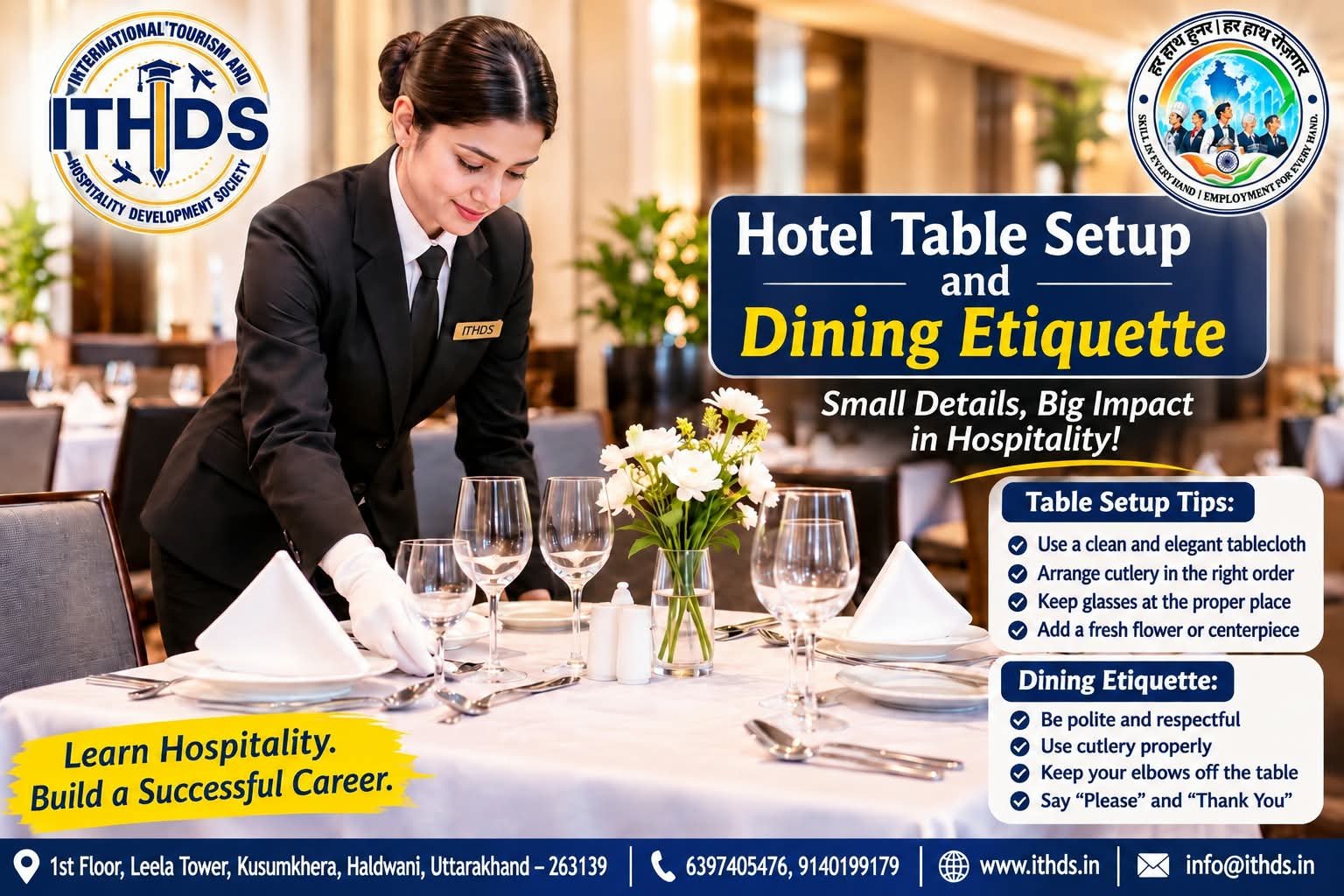
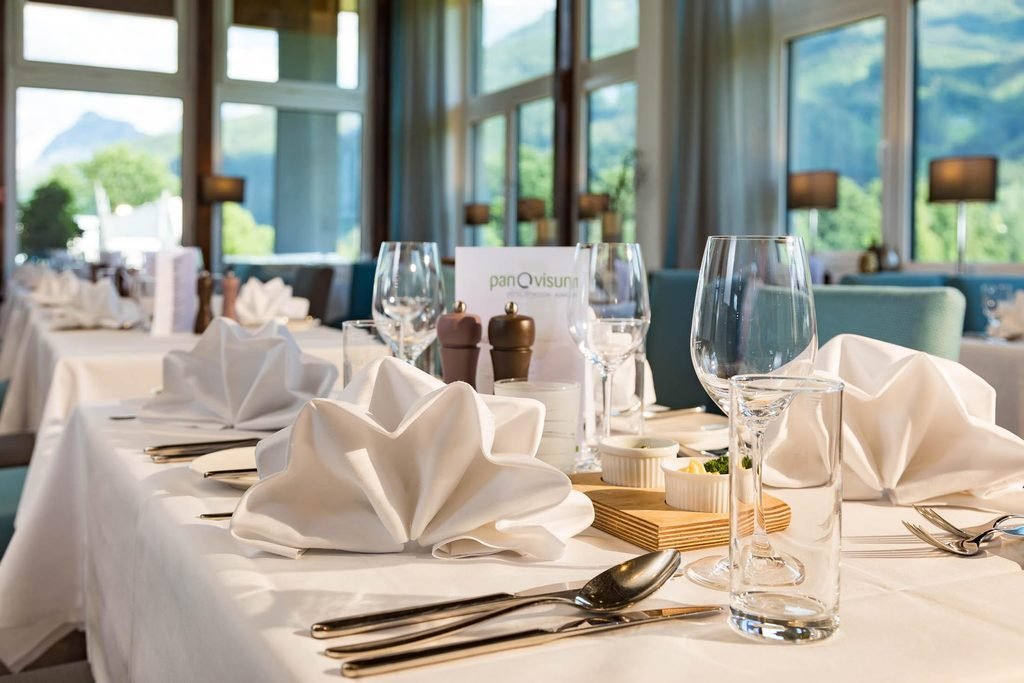
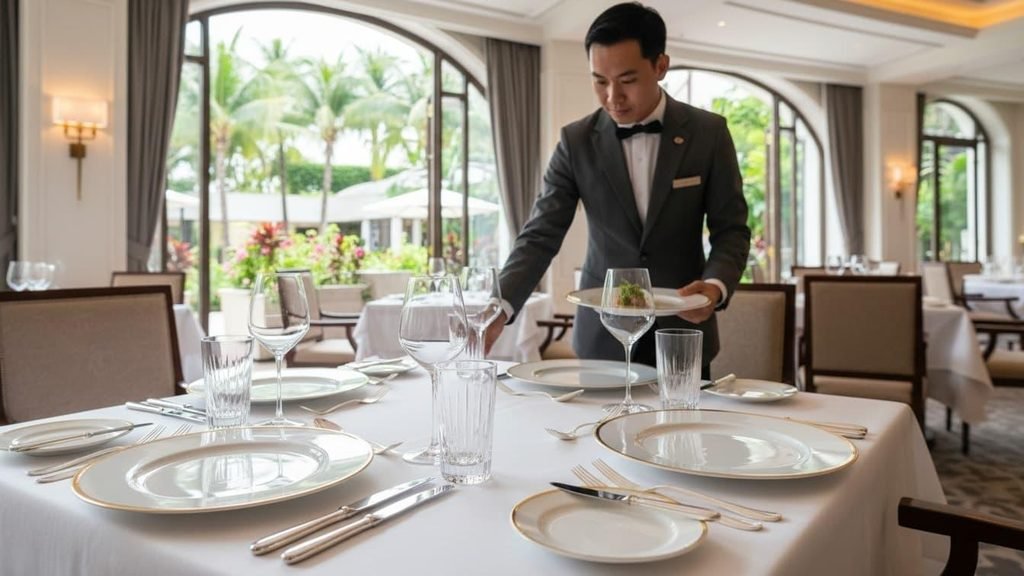
Hotel table setup means arranging everything on a dining table before guests arrive. It includes placing plates, spoons, forks, knives, glasses, and napkins in the correct positions.

A properly arranged table looks attractive and makes it easier for guests to enjoy their meals. In hotels, table setup may change depending on the type of restaurant, the menu, and the occasion.

For example, a breakfast table may have a simple arrangement, while a fine-dining restaurant may use more crockery, cutlery, and glassware.

Here are some important things to remember while setting up a table:

  • Always use clean plates, glasses, and cutlery.
  • Make sure the tablecloth is neat and free from stains.
  • Place forks, knives, and spoons in the correct positions.
  • Fold napkins neatly.
  • Keep the table clean and organized.
  • Check the entire arrangement before guests arrive.

What Is Dining Etiquette?

Dining etiquette means following good manners while eating or dining with others. It helps people feel comfortable and shows respect for everyone at the table.

In hotels and restaurants, dining etiquette is important for both guests and staff. Hotel employees should speak politely, serve food carefully, and maintain a professional attitude.

Some basic dining etiquette rules include:

  • Sit properly and maintain good posture.
  • Use a fork, spoon, and knife correctly.
  • Chew food with your mouth closed.
  • Avoid speaking while your mouth is full.
  • Be polite and respectful to others.
  • Say “Please” and “Thank you” when needed.
  • Avoid making unnecessary noise while eating.
  • Keep your dining area clean.

These simple habits help create a pleasant dining environment.

Why Is Table Setup Important in Hotels?

Imagine entering a hotel restaurant and finding a clean table with neatly arranged plates, shining glasses, and perfectly placed cutlery. It creates a positive first impression even before the food arrives.

A good table setup is important for several reasons.

1. Creates a good first impression

Guests often notice the appearance of a restaurant before they experience the food or service. A neat table makes the restaurant look professional.

2. Improves guest satisfaction

When everything is arranged properly, guests can enjoy their meals comfortably without searching for the items they need.

3. Maintains cleanliness

Clean crockery, polished glassware, and properly handled cutlery help maintain hygiene standards.

4. Shows professionalism

A well-arranged table reflects the care and attention that hotel staff give to their work.

Steps for Proper Hotel Table Setup

Setting up a hotel table is not difficult, but it requires attention to detail. Here are some simple steps that hotel management students can follow.

Step 1: Clean the table

Before placing anything on the table, make sure it is clean and ready for use.

Step 2: Arrange the tablecloth

If a tablecloth is required, spread it neatly and make sure it is free from wrinkles and stains.

Step 3: Place the plates

Position the main plate correctly and add side plates or other crockery according to the menu.

Step 4: Arrange the cutlery

Place forks on the left and knives on the right, with the cutting edge facing the plate. Spoons are generally placed on the right when required.

Step 5: Place the glasses

Water glasses and other required glassware are usually placed above the knives, depending on the table-setting style.

Step 6: Fold the napkins

Use clean napkins and arrange them neatly on the plate or beside the cutlery.

Step 7: Check the final arrangement

Before guests arrive, check that everything is clean, properly positioned, and ready for service.

Conclusion

Hotel table setup and dining etiquette may seem like small parts of hotel service, but they have a big impact on the guest experience. A clean table, correct placement of cutlery, and polite behavior can make dining more comfortable and enjoyable.

For anyone planning to build a career in hospitality, learning these skills is a great starting point. Regular practice, attention to detail, and a positive attitude can help students become more professional and confident.

At the International Tourism and Hospitality Development Society (ITHDS), Haldwani, students can explore hospitality education and develop an understanding of the practical skills needed in the hotel and restaurant industry.

Learn today, practise every day, and prepare for a bright future in hospitality!