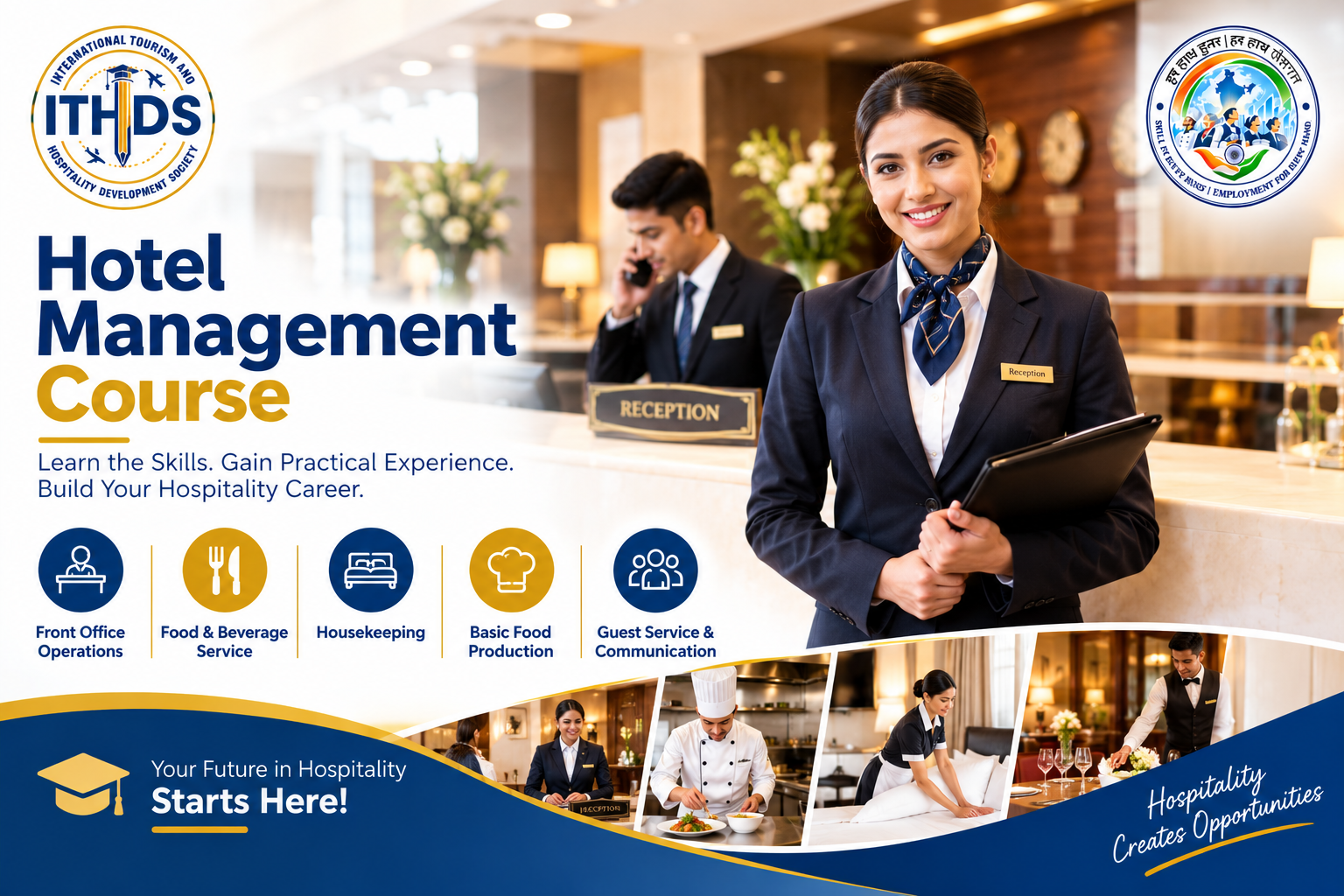
Hotel Management Course | Skills, Training & Career Opportunities

Hotel Management Course: A Complete Guide to Building a Career in Hospitality

Hospitality industry mein career banana chahne wale students ke liye Hotel Management Course ek practical aur career-focused option hai. Hotels, resorts, restaurants, cafés, banquet halls aur tourism businesses mein trained hospitality professionals ki requirement hoti hai.

What is a Hotel Management Course?

A Hotel Management Course students ko hotel aur hospitality industry ke different departments ke baare mein practical knowledge deta hai. Ismein students ko guest service, food & beverage, housekeeping, front office aur basic hotel operations ke baare mein sikhaya jata hai.

Course ka main focus students ko professional workplace ke liye prepare karna aur unmein practical skills develop karna hota hai.

What Do You Learn in Hotel Management?

1. Front Office Operations

Students ko guest reception, check-in and check-out procedures, reservations, communication aur basic front office operations ke baare mein training di jati hai.

2. Food & Beverage Service

Students restaurant setup, table service, order taking, guest handling aur professional food service techniques seekhte hain.

3. Housekeeping

Housekeeping training mein room preparation, cleaning techniques, hygiene, room inspection aur maintaining hotel standards jaise topics cover kiye jate hain.

4. Basic Food Production

Students ko kitchen operations, food preparation, kitchen hygiene, basic cooking methods aur safety practices ki basic understanding di jati hai.

5. Guest Service & Communication

Hospitality industry mein guest satisfaction bahut important hai. Students ko professional communication, guest handling, teamwork aur service etiquette develop karne par focus kiya jata hai.

Why Choose a Hotel Management Course?

Hotel Management ek practical field hai jahan students apni skills ko real workplace environment mein use kar sakte hain.

A Hotel Management Course students ko help kar sakta hai:

  • Practical hospitality skills develop karne mein
  • Communication aur confidence improve karne mein
  • Different hotel departments ko understand karne mein
  • Professional grooming aur workplace etiquette seekhne mein
  • Guest service skills develop karne mein
  • Hospitality industry ke liye prepare hone mein

Career Opportunities After Hotel Management

Course complete karne ke baad students hospitality industry ke different areas mein entry-level opportunities explore kar sakte hain.

Possible job roles include:

  • Front Office Associate
  • Guest Service Associate
  • Food & Beverage Service Associate
  • Restaurant Staff
  • Housekeeping Associate
  • Room Attendant
  • Kitchen Assistant
  • Banquet Service Staff
  • Hotel Receptionist

Experience aur additional training ke saath professionals supervisory aur managerial positions ki taraf bhi grow kar sakte hain.

Where Can Hotel Management Professionals Work?

Hotel management graduates aur trained hospitality professionals ke liye opportunities different establishments mein available ho sakti hain:

  • Hotels
  • Resorts
  • Restaurants
  • Cafés
  • Banquet Halls
  • Guest Houses
  • Clubs
  • Catering Companies
  • Tourism & Hospitality Businesses

Who Should Choose Hotel Management?

Hotel Management Course un students ke liye suitable ho sakta hai jo:

  • Hospitality industry mein interest rakhte hain
  • Logon ke saath interact karna pasand karte hain
  • Practical education prefer karte hain
  • Hotels aur restaurants mein career banana chahte hain
  • Communication aur professional skills improve karna chahte hain
  • Service industry mein career explore karna chahte hain

Practical Skills Matter in Hospitality

Hospitality industry mein sirf theoretical knowledge kaafi nahi hoti. Students ko communication, teamwork, discipline, grooming aur practical service skills bhi develop karni hoti hain.

Practical training students ko workplace environment ko samajhne aur apne skills ko confidence ke saath apply karne mein help karti hai.

Start Your Hospitality Career

Agar aap hotel industry mein career banana chahte hain, to ek Hotel Management Course aapko hospitality ke different areas ko samajhne aur professional skills develop karne ka strong foundation de sakta hai.

International Tourism and Hospitality Development Society (ITHDS) ka focus skill-based aur career-oriented hospitality education par hai, jahan students ko hospitality industry ke practical aspects ko samajhne aur workplace-ready skills develop karne ka opportunity milta hai.

Learn the skills. Build confidence. Start your hospitality career.


Frequently Asked Questions

What is a Hotel Management Course?

Hotel Management Course ek hospitality-focused program hai jisme students ko front office, housekeeping, food & beverage, basic food production aur guest service jaise areas ki training di jati hai.

What jobs can I get after Hotel Management?

Students Front Office Associate, Guest Service Associate, Restaurant Staff, Housekeeping Associate, Room Attendant, Kitchen Assistant aur Banquet Service Staff jaise entry-level roles explore kar sakte hain.

Is Hotel Management a good career option?

Hospitality industry mein interest rakhne wale students ke liye Hotel Management ek practical career option ho sakta hai, especially agar unhe customer service aur people interaction pasand hai.

What skills are important in Hotel Management?

Communication, teamwork, guest service, professional grooming, discipline, time management aur practical hospitality skills important hain.

Can freshers join a Hotel Management Course?

Yes, freshers hospitality training ke through basic knowledge aur practical skills develop karke industry mein entry-level opportunities ke liye prepare kar sakte hain.
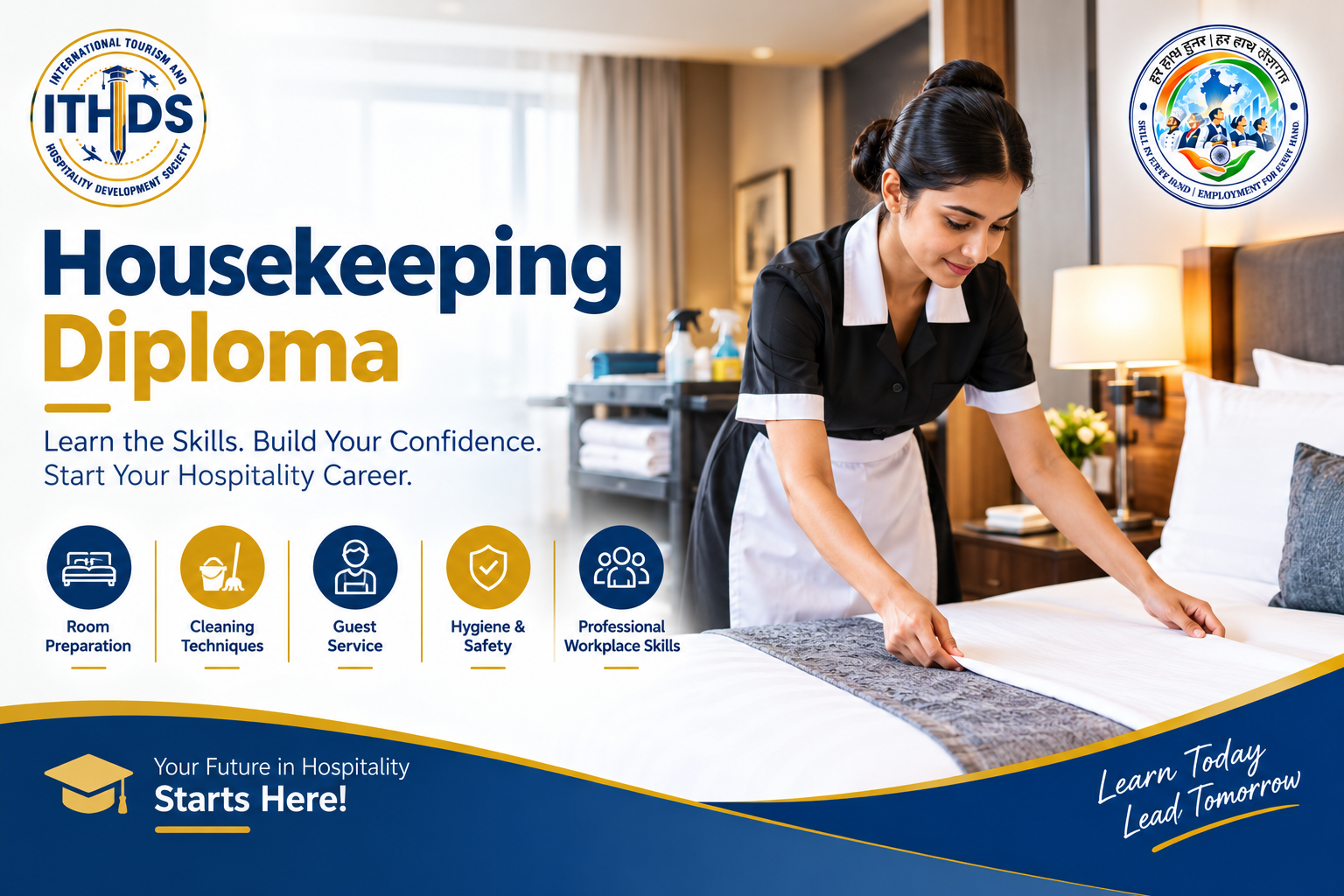
Housekeeping Diploma | Course, Skills & Career Opportunities

Housekeeping Diploma: Course, Skills & Career Opportunities

A clean, comfortable, and well-maintained environment is one of the most important parts of the hospitality industry. Behind every well-presented hotel room and welcoming property is a trained housekeeping team that manages cleanliness, hygiene, room preparation, and guest comfort.

A Housekeeping Diploma is a practical, career-focused course for students who want to develop professional housekeeping skills and build a career in hotels, resorts, restaurants, and other hospitality establishments.

What is a Housekeeping Diploma?

A Housekeeping Diploma introduces students to the essential principles and practical skills involved in professional housekeeping operations.

The course covers areas such as room preparation, cleaning techniques, hygiene and safety, guest service, professional grooming, and workplace procedures.

Students can gain both theoretical knowledge and practical understanding of how housekeeping departments operate in professional hospitality environments.

What Do You Learn in a Housekeeping Diploma?

A professional housekeeping course can cover several important areas:

1. Room Preparation

Students learn how to prepare guest rooms according to professional hospitality standards, including bed making, room arrangement, and checking room presentation.

2. Cleaning Techniques

Training introduces students to appropriate cleaning methods, equipment, cleaning products, and procedures used for different areas and surfaces.

3. Housekeeping Operations

Students learn about daily housekeeping activities, room assignments, cleaning schedules, supplies, and coordination within the housekeeping department.

4. Hygiene & Safety

Maintaining proper hygiene and following safety procedures are essential in hospitality. Students learn about personal hygiene, safe cleaning practices, chemical handling, and workplace safety.

5. Guest Service

Housekeeping staff interact with guests and play an important role in their overall experience. Students learn professional communication, guest assistance, and basic service etiquette.

6. Professional Grooming & Workplace Skills

The course also focuses on grooming, discipline, teamwork, communication, time management, and professional behavior.

Why Choose a Housekeeping Diploma?

A Housekeeping Diploma can be a good choice for students looking for practical training and an entry point into the hospitality industry.

The course can help students:

  • Develop practical housekeeping skills
  • Learn professional cleaning techniques
  • Understand hotel housekeeping operations
  • Improve communication and guest-handling skills
  • Develop professional grooming and workplace discipline
  • Learn hygiene and safety practices
  • Prepare for entry-level hospitality jobs

Career Opportunities After a Housekeeping Diploma

After completing a Housekeeping Diploma, students can explore entry-level opportunities in hotels, resorts, serviced apartments, hospitals, cruise hospitality, and other service establishments.

Potential job roles include:

  • Housekeeping Associate
  • Room Attendant
  • Housekeeping Attendant
  • Public Area Attendant
  • Laundry Attendant
  • Guest Room Assistant
  • Housekeeping Supervisor with relevant experience

With experience and additional training, professionals can progress towards supervisory and managerial positions in the housekeeping department.

Where Can Housekeeping Professionals Work?

Housekeeping skills can be useful across several hospitality and service environments, including:

  • Hotels
  • Resorts
  • Guest houses
  • Serviced apartments
  • Clubs
  • Hospitals
  • Cruise and tourism establishments
  • Hospitality service companies

Who Should Choose a Housekeeping Diploma?

A Housekeeping Diploma can be suitable for students who:

  • Are interested in the hospitality industry
  • Prefer practical and skill-based education
  • Enjoy maintaining clean and organized environments
  • Want to work in hotels and resorts
  • Want to develop professional workplace skills
  • Are interested in guest service and hotel operations

A positive attitude, attention to detail, discipline, and willingness to learn can help students build a strong foundation for a career in housekeeping.

Skills You Can Develop Through Housekeeping Training

Attention to Detail

Students learn how to identify cleanliness and presentation requirements and maintain high standards.

Time Management

Housekeeping involves completing multiple tasks within scheduled timeframes, making time management an important skill.

Teamwork

Housekeeping teams work closely with other hotel departments, so coordination and teamwork are essential.

Guest Communication

Students learn how to communicate politely and professionally when interacting with guests.

Hygiene & Safety

Training helps students understand the importance of cleanliness, personal hygiene, and safe working practices.

Professional Discipline

Regular procedures, grooming standards, punctuality, and workplace etiquette help students develop professional habits.

Build Your Career in Hospitality with Housekeeping Training

Housekeeping is much more than cleaning hotel rooms. It is an essential department that contributes directly to guest comfort, hotel standards, and overall customer satisfaction.

A Housekeeping Diploma can provide students with practical knowledge and professional skills needed to begin their journey in the hospitality industry.

At International Tourism and Hospitality Development Society (ITHDS), our focus is on skill-based and career-oriented hospitality education. Students can develop practical knowledge, professional confidence, and workplace skills that can support their future career.

If you are interested in hotel operations and want to build a career in hospitality, Housekeeping training can be a strong first step towards your professional journey.


Frequently Asked Questions

1. What is a Housekeeping Diploma?

A Housekeeping Diploma is a hospitality course that teaches students professional housekeeping operations, room preparation, cleaning techniques, hygiene, safety, guest service, and workplace skills.

2. What can I do after completing a Housekeeping Diploma?

Students can explore entry-level roles such as Room Attendant, Housekeeping Associate, Housekeeping Attendant, Public Area Attendant, and Laundry Attendant.

3. Is a Housekeeping Diploma useful for a hotel career?

Yes. Housekeeping is an important department in hotels and resorts, and professional training can help students develop the practical skills required for entry-level positions.

4. What skills are taught in housekeeping training?

Training can include room preparation, bed making, cleaning techniques, housekeeping operations, hygiene, safety, guest service, professional grooming, communication, and teamwork.

5. Can freshers join a Housekeeping course?

Yes. A housekeeping course can be suitable for freshers who want to learn practical hospitality skills and begin their career in the hotel industry.

6. Where can housekeeping professionals work?

Housekeeping professionals can find opportunities in hotels, resorts, guest houses, serviced apartments, clubs, hospitals, cruise hospitality, and other service establishments.

7. Can I become a Housekeeping Supervisor after the course?

A diploma can provide a foundation for a housekeeping career. With relevant work experience, additional training, and strong performance, professionals can progress towards supervisory positions.

8. Why is practical training important in housekeeping?

Practical training helps students understand real housekeeping procedures, develop cleaning and room-preparation skills, improve confidence, and become familiar with professional workplace standards.

Start Your Hospitality Journey

Learn the skills. Build confidence. Create your future in hospitality.

International Tourism and Hospitality Development Society (ITHDS)
Skill-Based Hospitality Education for a Better Career

Food & Beverage Diploma
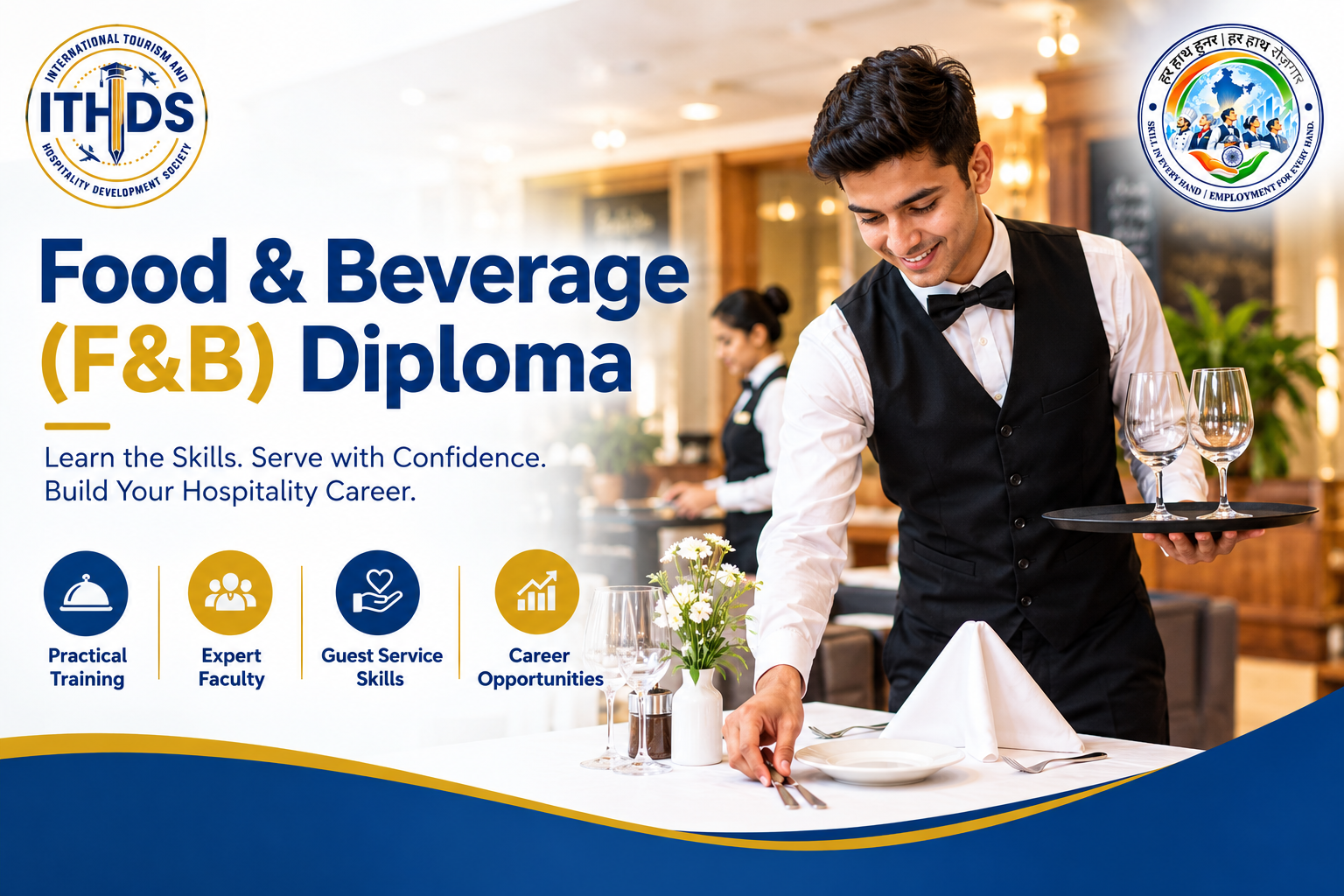
Food & Beverage (F&B) Diploma | Course, Skills & Career

Food & Beverage (F&B) Diploma: Course, Skills & Career Opportunities


The Food & Beverage (F&B) industry is an important part of the hospitality sector. Hotels, restaurants, resorts, cafés, banquet halls, clubs, and catering companies all require trained professionals who can provide quality food service and a good guest experience.

A Food & Beverage Diploma is a practical course designed for students who want to develop professional skills in food service and build a career in the hospitality industry.

The course focuses on practical training, guest service, communication, hygiene, restaurant operations, and professional workplace skills.

What is a Food & Beverage Diploma?

A Food & Beverage Diploma is a career-oriented hospitality course that introduces students to the fundamentals of food and beverage service.

Students learn how professional restaurants and hospitality establishments operate and develop the practical skills required to work in different food service environments.

The course can be a good starting point for students who want to enter the hotel, restaurant, resort, café, banquet, or catering industry.

What Do You Learn in a Food & Beverage Diploma?

A good F&B training program covers both technical and professional skills. Some of the important areas include:

1. Food & Beverage Service

Students learn the fundamentals of professional food and beverage service, including taking orders, serving guests, clearing tables, and maintaining service standards.

2. Restaurant Setup & Table Service

Training includes table setting, cutlery placement, napkin folding, restaurant preparation, and maintaining an organized dining area.

3. Guest Handling & Communication

Hospitality is strongly connected with customer service. Students learn how to welcome guests, understand their requirements, communicate professionally, and handle basic guest queries.

4. Menu Knowledge

Students are introduced to different types of menus, food items, beverages, and basic hospitality terminology. This helps them communicate more confidently with guests.

5. Hygiene & Food Safety

Cleanliness and hygiene are essential in food service. Students learn about personal hygiene, workplace cleanliness, basic food safety practices, and safe working procedures.

6. Professional Grooming & Workplace Etiquette

Students also develop professional grooming, discipline, teamwork, communication, and workplace etiquette—skills that are important when working in hotels and restaurants.

Why Choose a Food & Beverage Diploma?

Choosing an F&B Diploma course can be a practical way to start a career in hospitality.

The course can help students:

  • Develop practical food service skills
  • Improve communication and confidence
  • Learn professional guest-handling techniques
  • Understand restaurant operations
  • Develop workplace discipline and teamwork
  • Prepare for entry-level hospitality positions
  • Build a foundation for further hospitality education

Career Opportunities After a Food & Beverage Diploma

After completing an F&B Diploma, students can explore entry-level opportunities in hotels, restaurants, resorts, cafés, banquet facilities, clubs, and catering companies.

Potential job roles include:

  • Food & Beverage Service Associate
  • Restaurant Service Staff
  • Waiter / Steward
  • Banquet Service Staff
  • Café Service Staff
  • Room Service Associate
  • Catering Service Staff
  • F&B Supervisor with relevant experience

With experience, additional training, and professional development, students can progress towards supervisory and managerial positions.

Where Can F&B Professionals Work?

Food and beverage professionals can find opportunities across different areas of the hospitality industry, including:

  • Hotels
  • Restaurants
  • Resorts
  • Cafés
  • Banquet halls
  • Catering companies
  • Clubs
  • Food service establishments
  • Hospitality and tourism businesses

This variety allows students to choose a work environment that matches their interests and career goals.

Who Should Choose an F&B Diploma?

An F&B Diploma can be suitable for students who:

  • Are interested in the hospitality industry
  • Enjoy interacting with people
  • Want practical, skill-based education
  • Are interested in hotels and restaurants
  • Want to develop professional communication skills
  • Want to start a career in food and beverage service

Students who are motivated, disciplined, willing to learn, and comfortable working with people can build a strong foundation through F&B training.

Skills You Can Develop Through F&B Training

Apart from technical food service knowledge, students can develop several professional skills, including:

Communication: Learn how to communicate clearly and professionally with guests and colleagues.

Customer Service: Understand how to provide a positive and welcoming guest experience.

Teamwork: Learn how to coordinate with kitchen, service, housekeeping, and other hospitality teams.

Time Management: Develop the ability to work efficiently during busy service periods.

Professional Grooming: Understand the importance of appearance, hygiene, and workplace etiquette.

Problem Solving: Learn how to respond calmly and professionally to common guest requirements and service situations.

Build Your Career in Hospitality with Practical Training

A successful hospitality career requires more than theoretical knowledge. Practical skills, communication, discipline, and professional behavior play an important role in the industry.

A Food & Beverage Diploma provides students with a foundation in food service operations and helps them prepare for real workplace environments.

At the International Tourism and Hospitality Development Society (ITHDS), our approach focuses on skill-based and career-oriented hospitality education. Students are introduced to practical aspects of hospitality while developing the confidence and professional skills needed for the workplace.

If you are interested in hotels, restaurants, food service, and guest interaction, an F&B Diploma can be a valuable first step towards your hospitality career.

Frequently Asked Questions (FAQs)

1. What is a Food & Beverage Diploma?

A Food & Beverage Diploma is a hospitality course that teaches students the fundamentals of food and beverage service, restaurant operations, guest handling, hygiene, communication, and professional hospitality skills.

2. What can I do after completing an F&B Diploma?

After completing the course, students can apply for entry-level positions such as waiter, steward, restaurant service staff, banquet service staff, café service staff, room service associate, and catering service staff.

3. Is an F&B Diploma good for a career in hotels?

Yes. An F&B Diploma can provide practical knowledge and skills that are useful for entry-level positions in hotels, restaurants, resorts, cafés, banquets, and other hospitality establishments.

4. What skills are taught in F&B training?

F&B training generally covers food and beverage service, table setting, menu knowledge, guest handling, communication, hygiene, food safety, professional grooming, teamwork, and workplace etiquette.

5. Can freshers join a Food & Beverage course?

Yes. F&B courses can be suitable for freshers who want to develop practical hospitality skills and begin their career in the food and beverage sector.

6. What are the career opportunities after an F&B course?

Career opportunities may include Food & Beverage Service Associate, Waiter, Steward, Restaurant Service Staff, Banquet Service Staff, Café Service Staff, Room Service Associate, and Catering Service Staff. With experience, professionals can move into supervisory roles.

7. Is practical training important in Food & Beverage?

Yes. Practical training helps students understand how food service operations work in real hospitality environments and allows them to develop confidence, communication, teamwork, and service skills.

8. Can an F&B Diploma help me start a hospitality career?

Yes. An F&B Diploma can provide a strong foundation for students who want to enter the hospitality industry by developing practical service knowledge and professional workplace skills.

Start Your Hospitality Journey

If you are looking for a practical Food & Beverage Diploma and want to develop skills for a career in hospitality, the right training can help you take your first step with confidence.

Learn. Train. Develop Skills. Build Your Hospitality Career.

International Tourism and Hospitality Development Society (ITHDS)
Skill-Based Hospitality Education for a Better Career