
Restaurant Service Techniques – A Complete Guide for Hospitality Students
Introduction
Restaurant service is one of the most important parts of the hospitality industry. When guests visit a restaurant, they expect more than just delicious food. They also want friendly staff, quick service, a clean environment, and a comfortable dining experience.
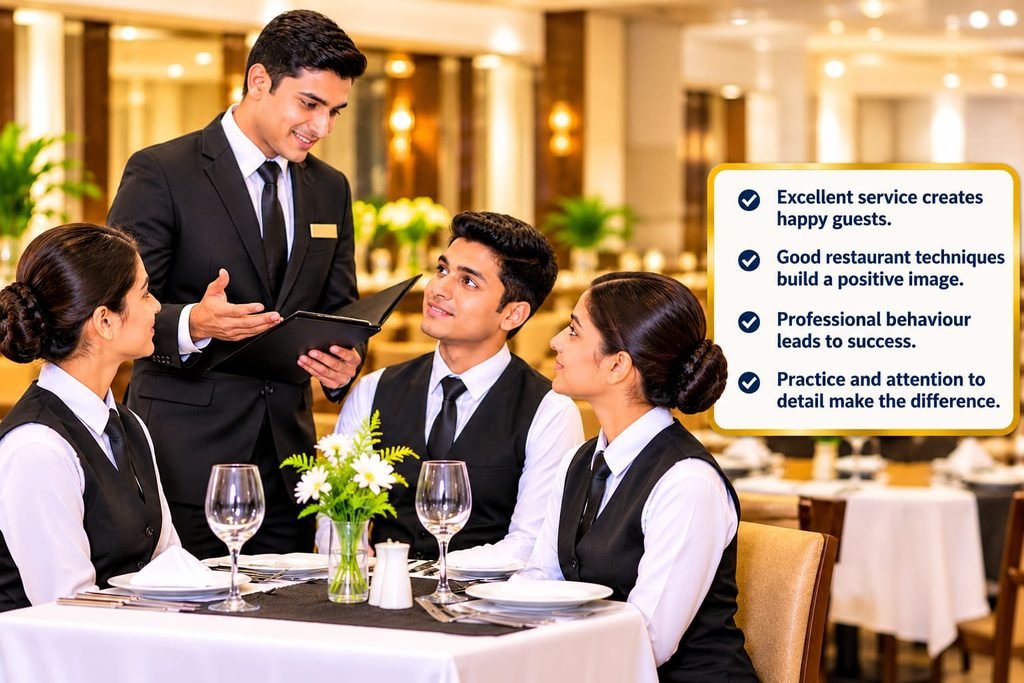
Good restaurant service makes guests feel welcome and special. A professional restaurant staff member understands how to communicate with customers, take orders correctly, serve food properly, and handle guest requests politely.
For hotel management students, learning restaurant service techniques is very important because these skills help them build a successful career in hotels, restaurants, cafés, and resorts.
Important Restaurant Service Techniques
1. Welcoming Guests with a Smile
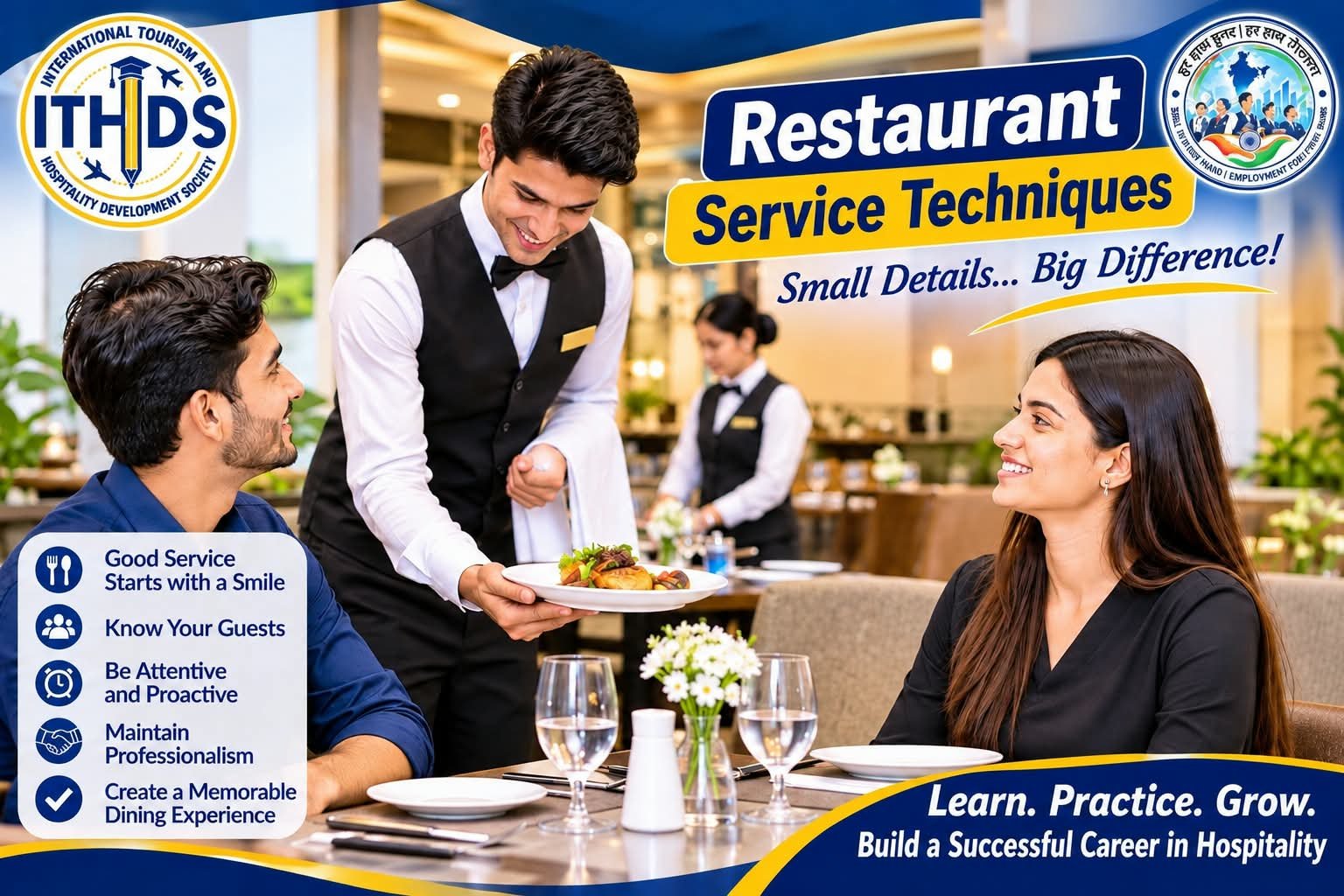
The first impression matters. Always welcome guests with a warm smile and a polite greeting. Make them feel comfortable when they enter the restaurant.
2. Proper Table Setup
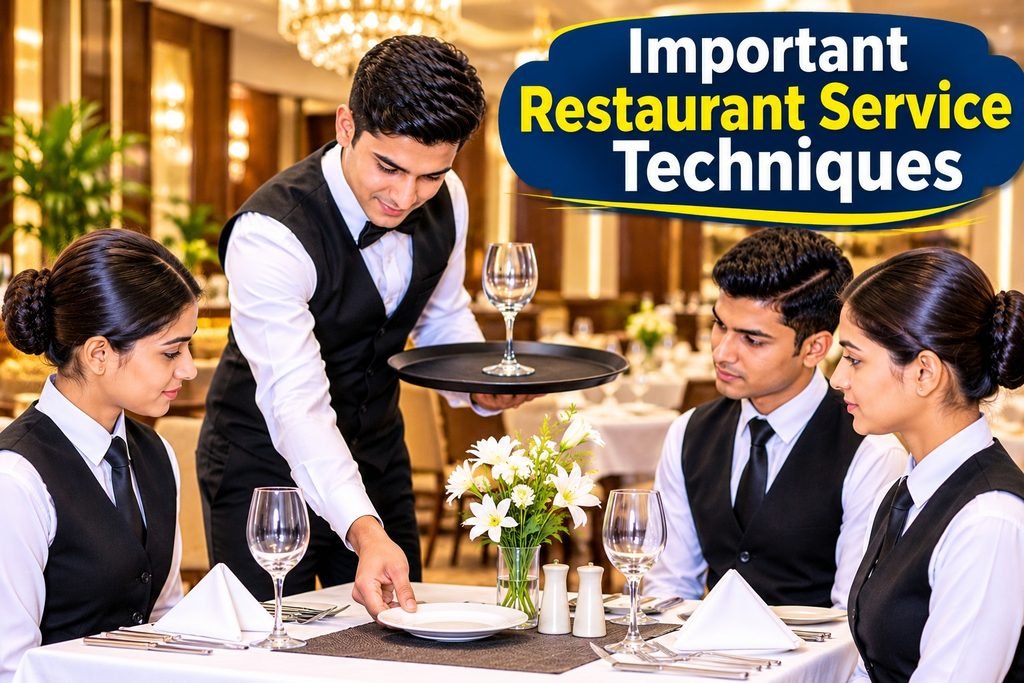
A clean and properly arranged table creates a good impression. Cutlery, crockery, glassware, napkins, and other table accessories should be placed correctly before guests arrive.
3. Taking Orders Correctly
Listen carefully when guests place their orders. Understand their requirements, repeat the order when necessary, and communicate any special requests to the kitchen staff.
4. Serving Food Professionally
Food should be served carefully and confidently. Staff should follow the restaurant’s service style, maintain proper serving etiquette, and avoid disturbing guests while they are eating.
5. Good Communication Skills
Restaurant staff should speak politely and clearly. They should listen to guests, answer questions confidently, and handle complaints patiently.
6. Maintaining Hygiene and Cleanliness
Personal grooming, clean uniforms, washed hands, and hygienic service practices are essential. Tables should also be cleaned and prepared properly for the next guests.
7. Handling Guest Complaints
Sometimes guests may not be satisfied with the service or food. Staff should listen calmly, apologise politely when appropriate, and inform the supervisor to resolve the issue.
8. Saying Thank You to Guests
Before guests leave, thank them for visiting. A simple smile and a polite goodbye can create a lasting positive impression.
Why Are Restaurant Service Skills Important?
Restaurant service skills help students and hospitality professionals:
- Build confidence and communication skills.
- Provide better customer service.
- Learn professional dining etiquette.
- Work efficiently as part of a team.
- Handle different types of guests.
- Develop career opportunities in the hospitality industry.
Practical Training for Hotel Management Students
Reading about restaurant service is helpful, but practical training makes learning more effective. Students should practise table setup, order taking, food serving, guest handling, and restaurant etiquette.
At the International Tourism and Hospitality Development Society (ITHDS), Haldwani, students can develop hospitality knowledge and practical skills to prepare for opportunities in the hotel and restaurant industry.
Conclusion
Restaurant service is not just about serving food; it is about making every guest feel comfortable, respected, and satisfied. A friendly smile, good communication, proper grooming, and professional service can turn an ordinary restaurant visit into a memorable experience.
Remember: Good food attracts guests, but excellent service brings them back!