
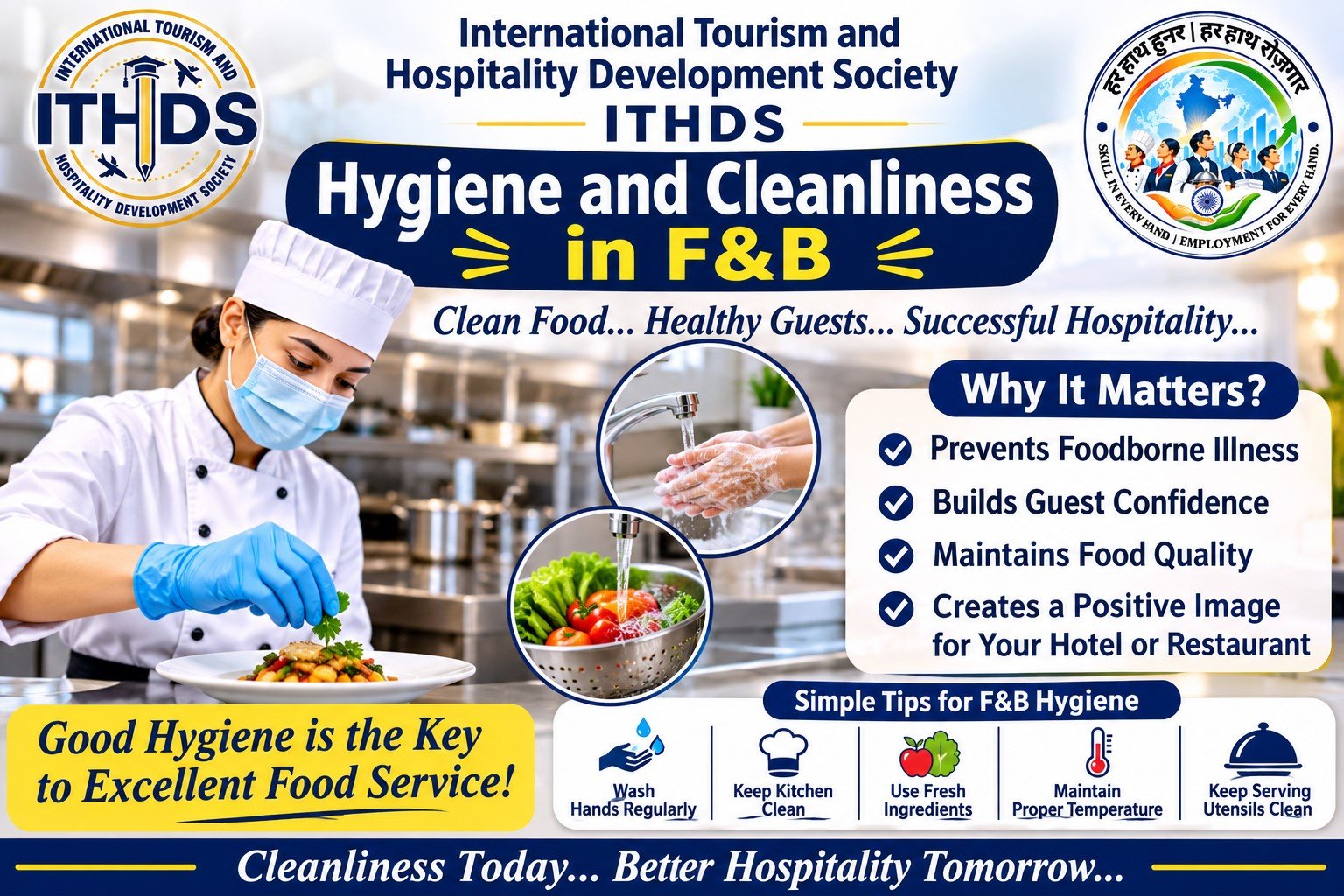

Hygiene and Cleanliness in Food & Beverage (F&B) – The Key to Guest Satisfaction
Hygiene and cleanliness are among the most important parts of the Food and Beverage (F&B) department in the hotel industry. When guests visit a hotel, restaurant, café or resort, they expect not only delicious food but also a clean environment, fresh ingredients and safe food handling.
Imagine visiting a restaurant where the tables are dirty, glasses are not properly washed, or the staff are not wearing clean uniforms. Even if the food tastes good, you may not feel comfortable eating there. This is why cleanliness plays such an important role in creating a positive dining experience.
In the hospitality industry, good hygiene is not just about keeping things clean. It is about protecting guests’ health, maintaining food quality and building trust.
1. What is Hygiene and Cleanliness in F&B?
Hygiene and cleanliness in Food and Beverage refer to maintaining proper cleanliness while preparing, cooking, storing, serving and handling food and drinks.
It includes keeping the kitchen, restaurant, dining tables, cooking equipment, cutlery, crockery and glassware clean and hygienic.
Every employee working in the F&B department has a responsibility to follow hygiene practices and maintain a safe environment for guests.
2. Importance of Hygiene and Cleanliness in F&B
Cleanliness directly affects the reputation and success of a hotel or restaurant.
The major benefits include:
- Guest Health and Safety: Proper hygiene helps protect guests from food contamination and foodborne illnesses.
- Customer Satisfaction: Guests feel comfortable when they see clean tables, fresh food and hygienic service.
- Good Restaurant Reputation: Cleanliness creates a positive impression and encourages guests to visit again.
- Food Quality: Proper storage and handling help maintain the freshness and quality of food.
- Professional Image: Clean uniforms, organised workstations and hygienic service reflect professionalism.
- Better Business: Satisfied guests are more likely to recommend the restaurant to friends and family.
3. Personal Hygiene for F&B Staff
Personal hygiene is very important for every employee working in a hotel restaurant, kitchen or food service area.
F&B employees should follow these basic practices:
- Wash hands properly before handling food.
- Wear a clean and properly ironed uniform.
- Keep fingernails short and clean.
- Wear a clean hairnet or suitable head covering where required.
- Avoid wearing unnecessary jewellery while handling food.
- Maintain oral hygiene and personal cleanliness.
- Cover cuts and wounds with suitable waterproof dressings.
- Never handle food when suffering from an illness that could contaminate it.
A professional F&B employee always understands that personal cleanliness is part of good customer service.
4. Kitchen Hygiene and Food Safety
The kitchen is one of the most important areas where hygiene must be maintained. Food is prepared, cooked and stored here, so even a small mistake can affect food safety.
Important kitchen hygiene practices include:
- Clean kitchen floors, walls and working surfaces regularly.
- Wash and sanitise food preparation equipment.
- Keep raw and cooked food separate.
- Use separate chopping boards for different food items.
- Store food at appropriate temperatures.
- Keep dustbins covered and empty them regularly.
- Protect food from insects, pests and contamination.
- Check food quality and expiry dates before use.
Remember: A clean kitchen is the foundation of safe and quality food service.
5. Cleanliness of Cutlery, Crockery and Glassware
Cutlery, crockery and glassware are directly used by guests. Therefore, they must be properly washed, sanitised, dried and stored.
| Items | Hygiene practices |
|---|---|
| Cutlery | Wash, sanitise and dry properly |
| Crockery | Check plates and bowls for stains or cracks |
| Glassware | Ensure glasses are clean and free from fingerprints |
| Serving trays | Clean and sanitise after use |
| Table linen | Use fresh and clean napkins and tablecloths |
Before serving guests, F&B staff should always check that all service items are clean and ready to use.
6. Restaurant and Dining Area Cleanliness
The restaurant dining area creates the first impression on guests. A clean and well-organised restaurant makes guests feel comfortable and welcome.
Employees should:
- Clean dining tables after every guest.
- Arrange chairs and tables properly.
- Keep floors dry and clean.
- Replace dirty tablecloths and napkins.
- Clean menus regularly.
- Maintain clean washrooms.
- Keep proper ventilation and a fresh atmosphere.
- Ensure waste bins are clean and covered.
A clean dining area shows that the restaurant cares about its guests.
7. Safe Food Handling Practices
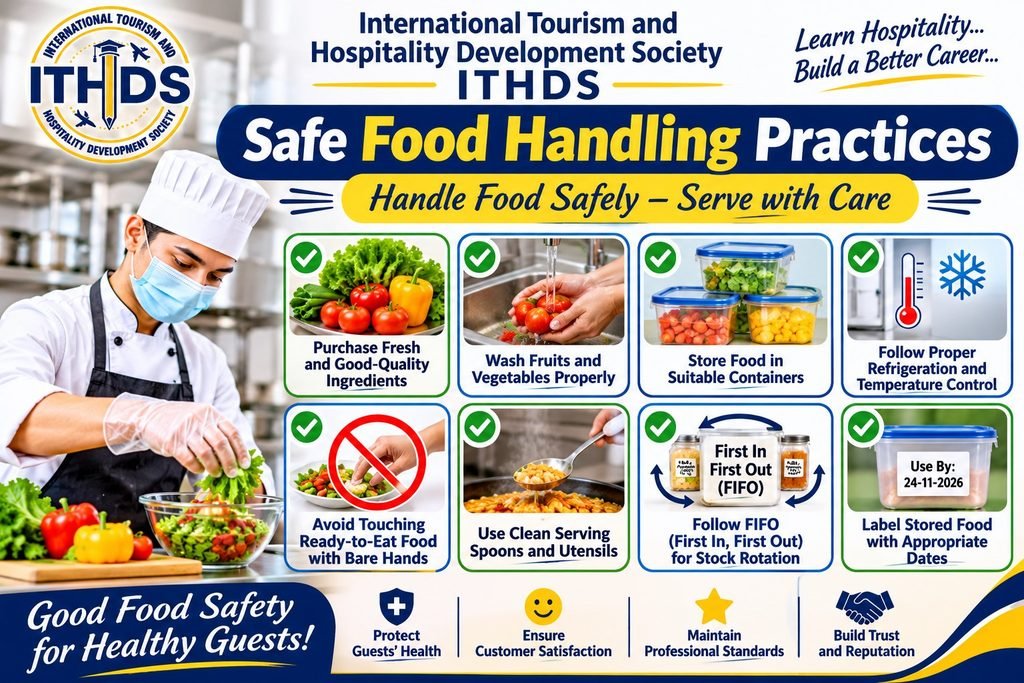
Food handling is another important responsibility of the F&B department. Employees must understand how to handle food safely from storage to final service.
Some important practices are:
- Purchase fresh and good-quality ingredients.
- Wash fruits and vegetables properly with safe water.
- Store food in suitable containers.
- Follow proper refrigeration and temperature-control procedures.
- Avoid touching ready-to-eat food with bare hands.
- Use clean serving spoons and utensils.
- Follow FIFO (First In, First Out) for stock rotation.
- Label stored food with appropriate dates.
These practices help reduce food contamination and maintain food quality.
8. Common Hygiene Mistakes in F&B
Sometimes employees make small mistakes that can create serious hygiene problems.
| Common mistake | Correct practice |
|---|---|
| Not washing hands | Wash hands at appropriate times |
| Wearing dirty uniforms | Wear clean uniforms daily |
| Using dirty utensils | Clean and sanitise utensils |
| Mixing raw and cooked food | Keep them separate |
| Leaving food uncovered | Cover and protect food |
| Ignoring waste disposal | Dispose of waste properly |
| Using expired ingredients | Check expiry and use-by dates |
Avoiding these mistakes helps maintain professional standards.
9. Role of Hotel Management Students in Maintaining Hygiene
Students studying Hotel Management should develop good hygiene habits from the beginning of their training.
During practical classes, they should learn:
- Kitchen cleanliness and sanitation.
- Restaurant setup and table cleaning.
- Personal grooming standards.
- Safe food preparation and handling.
- Cleaning and polishing cutlery, crockery and glassware.
- Proper waste management.
- Food storage and stock rotation.
At ITHDS, practical learning can help students understand the importance of cleanliness and prepare them for professional responsibilities in hotels, restaurants, resorts and other hospitality businesses.
10. How Hygiene Improves Guest Experience
Guests remember more than just the taste of the food. They also notice the cleanliness of the restaurant, the appearance of employees and the way food is served.
When guests find clean tables, hygienic food, polished cutlery and professional staff, they feel confident about the establishment.
Good hygiene creates trust, improves customer satisfaction and encourages repeat visits.
11. Daily Hygiene Checklist for F&B Employees
- Wear a clean uniform.
- Maintain personal grooming.
- Wash hands properly.
- Clean and sanitise workstations.
- Check cutlery, crockery and glassware.
- Keep food covered and stored safely.
- Maintain clean dining tables.
- Dispose of waste properly.
- Keep floors and washrooms clean.
- Follow food safety procedures.
Conclusion
Hygiene and cleanliness are not optional activities in the Food and Beverage department; they are essential responsibilities. A successful restaurant is not only known for delicious food but also for its cleanliness, food safety and quality of service.
Every hotel employee, from kitchen staff to restaurant service staff, plays an important role in maintaining hygiene standards.
For Hotel Management students, learning cleanliness and food safety practices is an important step towards becoming skilled and professional hospitality employees.
Remember: Clean Food, Safe Service and Happy Guests are the foundation of successful hospitality.